
www.agritechmag.com
10
'26
Written on Modified on
Dual Baling Binding Integration for Agricultural Machinery
CLAAS integrates film-tying mechanics into fixed-chamber balers to optimize forage preservation and recycling workflows in mechanized agriculture.
www.claas.com
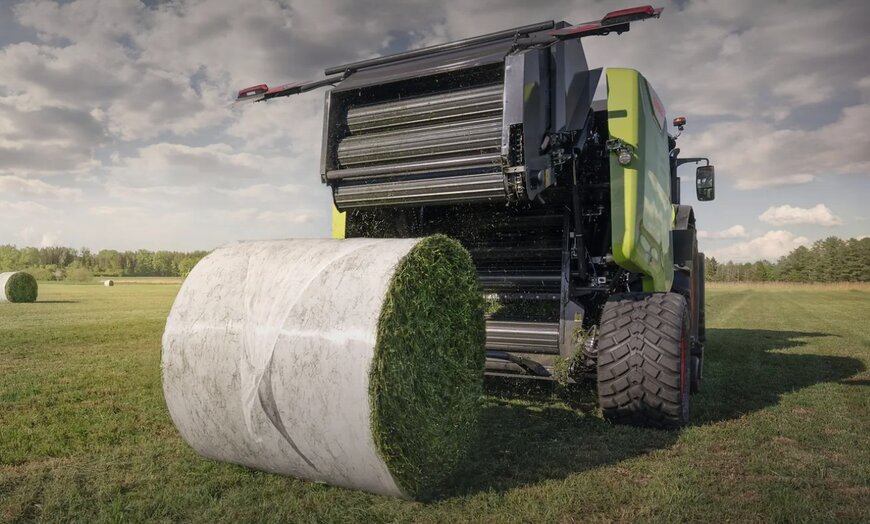
CLAAS has extended film-tying technology to its fixed-chamber round baler architecture, addressing agricultural automation and crop conservation requirements across livestock and forage production. The mechanical update introduces dual-media binding options to solo baling equipment, enabling farmers to interchange net and plastic wrapping based on crop moisture and storage parameters.
Operational Challenges and Forage Protection
Harvesting silage requires oxygen barrier formation to reduce spoilage, whereas dry crops such as hay and straw require breathable containment to prevent internal condensation and molding. Conventional round balers using standard net binding expose silage to higher ambient air infiltration during bale transfer. Net separation from outer stretch film at feeding stages also complicates single-stream plastic recycling workflows on agricultural sites.
Mechanical Integration and Functional Design
The implemented system adapts the binding assembly previously utilized in combination units to solo fixed-chamber machines. A mechanical feed unit permits operators to alternate between net rolls and stretch-film rolls within the same binding chassis without structural machine reconfiguration:
- Silage Processing: The mechanism applies wide binding film across the cylindrical surface of the bale, improving edge tightness, dimensional stability, and anaerobic sealing prior to transport.
- Dry Crop Processing: Netting remains available for fibrous crops, providing resistance against stem puncture while preserving air permeability across the outer diameter.
- Feed and Compression Components: Material intake is managed by a five-row pick-up running at a 10 percent higher rotational speed, feeding into a 25-knife rotor configured for a theoretical cutting length of 44 mm. Bale core density is maintained through a three-roller swiveling segment operating under hydraulic pressure control inside the 1.25 m chamber.
Deployment and Operational Benefits
The binding system operates across standard round-bale dimensions, maintaining mechanical compatibility with reinforced heavy-duty drive components designed for continuous load cycles. Field deployment focuses on dairy and livestock operations managing dual-harvest schedules.
Applying stretch film directly in the chamber creates uniform bale geometry, which stabilizes handling and stacking. In feed operations, combining the chamber wrap with identical external wrap materials eliminates the manual separation of netting from plastic, streamlining waste handling into a single recycling process. For coarse straw harvests, switching back to net media ensures structural integrity against stubble abrasion without requiring supplementary machine modifications.
Edited by Evgeny Churilov, Induportals Media - Adapted by AI.
www.claas.com
