
www.agritechmag.com
04
'24
Written on Modified on
Dunkermoteren with linear movements straight towards efficient agriculture
An extended level of automation is the answer to these challenges enabling precision farming and durable, long-lasting machines which operate both, reliable and energy efficient.
www.dunkermotoren.com
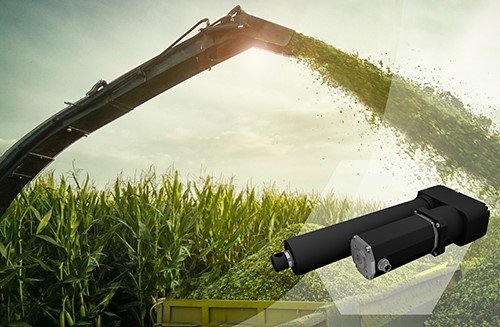
The oldest movement in the world - Linear movements on the next level
In tractors, seeders, harvesters, and sprayers, many movements are already automated. Linear movements are most often driven by hydraulic systems, which are complex, bulky, and require regular maintenance. As part of the fluid technology, hydraulic systems depend on oil to perform the necessary movement. Fluids, combined with the many components involved result in a risk of fluid leaks.
Electric linear actuators
On the other hand, can perform the same tasks as hydraulic systems while having lower space and maintenance, and offering additional features in terms of control and positioning. While hydraulic systems were designed purely to perform linear movements, it is primarily features such as intelligence and communication capability, as well as precise positioning that are needed to offer additional features and overcome current challenges - and this is only possible with the help of electric linear actuators.
How electric linear actuators improve overall agricultural efficiency and enable precision farming
While a simple linear movement with two positions (e.g. opened/ closed or folded/ extended) can be performed by both, hydraulic and electric technology, electric linear actuators operate more reliable and enable precise positioning of countless positions within the total range of motion.
Precision
Driven by a rotative DC motor with integrated encoder, finest movements and adjustments can be performed, and controlled acceleration and deceleration as well as motion profiles can be realized, allowing precision farming to optimize the use of resources and the fields.
Installation effort
Brushed or brushless DC motors are connected to a system by just a few cables. Integrated solutions where the motor control is included into the motor housing even reduce the required cabling, making the installation very easy compared to hydraulic or pneumatic systems.
Durability
Packed in a robust and compact design, electric linear systems have less weak points than hydraulic solutions and are free of maintenance. Additionally, when adding integrated electronics with bus or Industrial Ethernet communication interfaces, operating data can be monitored and analyzed, allowing an optimized operation and predictive maintenance which further extends the system’s service life.
Typical applications where electric linear actuators replace hydraulic driven movements in agricultural applications are
In tractors, seeders, harvesters, and sprayers, many movements are already automated. Linear movements are most often driven by hydraulic systems, which are complex, bulky, and require regular maintenance. As part of the fluid technology, hydraulic systems depend on oil to perform the necessary movement. Fluids, combined with the many components involved result in a risk of fluid leaks.
Electric linear actuators
On the other hand, can perform the same tasks as hydraulic systems while having lower space and maintenance, and offering additional features in terms of control and positioning. While hydraulic systems were designed purely to perform linear movements, it is primarily features such as intelligence and communication capability, as well as precise positioning that are needed to offer additional features and overcome current challenges - and this is only possible with the help of electric linear actuators.
How electric linear actuators improve overall agricultural efficiency and enable precision farming
While a simple linear movement with two positions (e.g. opened/ closed or folded/ extended) can be performed by both, hydraulic and electric technology, electric linear actuators operate more reliable and enable precise positioning of countless positions within the total range of motion.
Precision
Driven by a rotative DC motor with integrated encoder, finest movements and adjustments can be performed, and controlled acceleration and deceleration as well as motion profiles can be realized, allowing precision farming to optimize the use of resources and the fields.
Installation effort
Brushed or brushless DC motors are connected to a system by just a few cables. Integrated solutions where the motor control is included into the motor housing even reduce the required cabling, making the installation very easy compared to hydraulic or pneumatic systems.
Durability
Packed in a robust and compact design, electric linear systems have less weak points than hydraulic solutions and are free of maintenance. Additionally, when adding integrated electronics with bus or Industrial Ethernet communication interfaces, operating data can be monitored and analyzed, allowing an optimized operation and predictive maintenance which further extends the system’s service life.
Typical applications where electric linear actuators replace hydraulic driven movements in agricultural applications are
- Dosing and positioning of crops to keep a uniform seeding result.
- Dosing of fertilizer depending on the tactor’s speed.
- Movement and adjustment of the harvester header, depending on the crop.
- Control of the crop ejection.
Besides the “necessary” tasks to be performed during field work, features such as the definition of speed ramps for smooth start and stop movements, low cabling requirements, and a high efficiency allow additional linear movements to be economically automated by electric linear actuators, for example:
- Automatic adjustments within and around the tractor cabin for additional comfort.
- Opening and closing tasks on the tractor or tanks.
