
www.agritechmag.com
13
'26
Written on Modified on
Agricultural Baler Cutting System Maintenance and Performance
KUHN Introduces OPTICUT 15 Intake for VBP 7100 Series Baler-Wrapper Combinations to Streamline Knife Servicing and Ensure Continuous Forage Intake.
www.kuhn.com
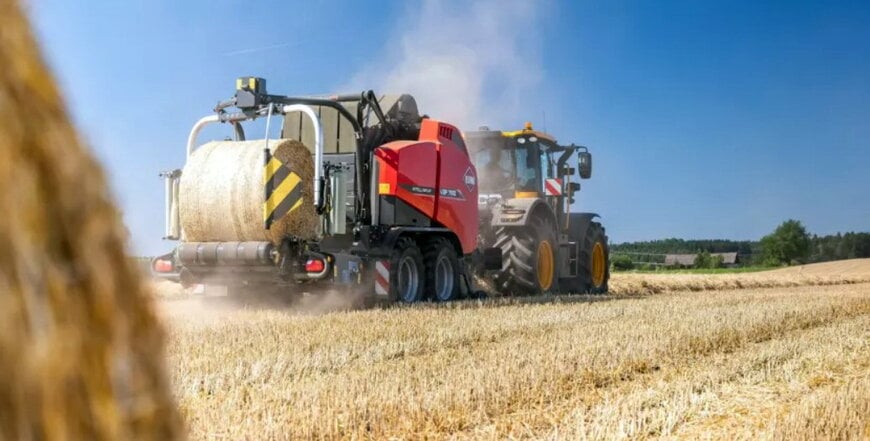
In commercial forage harvesting and baling operations, maintaining precise chop length while avoiding blockages and downtime during knife servicing represents a major mechanical challenge. To address these harvesting bottlenecks, agricultural machinery manufacturer KUHN has introduced the OPTICUT 15 intake rotor system for its VBP 7100 Series round baler-wrapper combinations, engineered specifically for silage, hay, and straw processing.
Mechanical Challenges in High-Throughput Forage Processing
High-density baling demands uniform cutting to optimize bale compaction, fermentation quality in silage, and subsequent mixing efficiency in livestock feed systems. However, conventional cutting beds often accumulate debris, dust, and plant sap in the knife slots, which can lead to knife seizure or failure to engage and disengage on demand. Furthermore, routine knife sharpening and replacement typically demand significant labor and downtime in the field, reducing overall harvesting capacity during tight weather windows.
The OPTICUT 15 intake unit is designed to mitigate these issues across heavy-duty contracting and commercial farming operations. By integrating mechanical safeguards and an accessible cutting floor layout, the system protects driveline components from shock loads caused by foreign objects while preserving throughput rates.
Sliding Knife Cassette Architecture and Servicing Mechanics
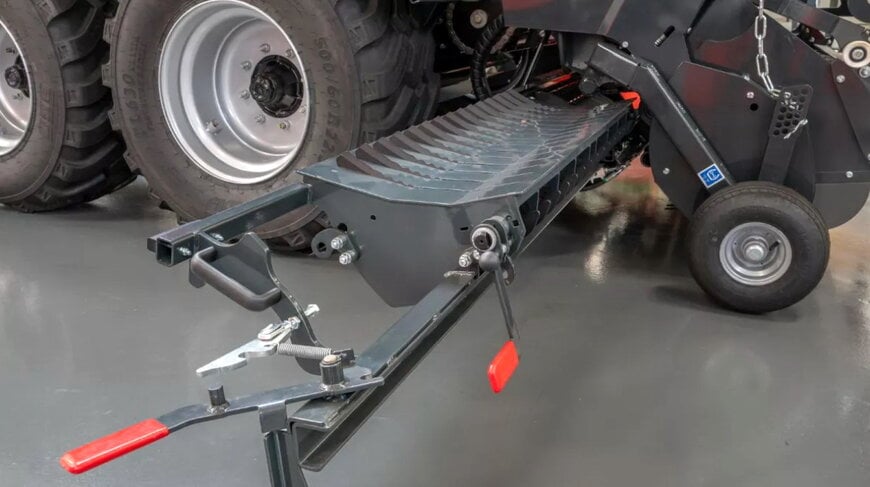
At the core of the OPTICUT 15 design is an extendable sliding knife cassette that provides direct, tool-free access to the cutting assembly. Operators can pull the cassette outward from the side of the machine, enabling ergonomic visual inspection, debris cleaning, and individual blade replacement without requiring hand tools or manual disassembly under the frame.
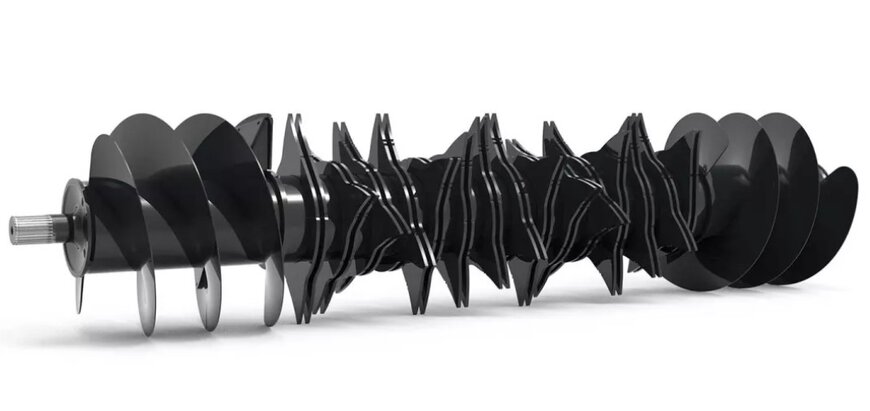
The cutting unit houses 15 individual knives, delivering a theoretical chop length of 70 mm. Each knife is secured with an individual kink-spring overload protection mechanism. When an incompressible object, such as a rock, enters the cutting zone, the affected knife yields against the spring pressure to prevent damage, subsequently returning to its set working position automatically.
To maintain reliable movement within the knife bank, the system incorporates patented pro-active knife cleaning. This automated cycle clears debris from the guide slots and knife pockets—including inactive knives held in reserve—preventing material build-up from jamming blades in either extended or retracted positions.
Integral Rotor Design and Forage Intake Integration
The cutting assembly pairs directly with KUHN INTEGRAL ROTOR technology, which incorporates rotor tines mounted on the same central shaft as the lateral augers. This single-shaft layout reduces the distance between the pick-up and the rotor, actively forcing crop into the cutting channel without relying on separate side-feed mechanisms.
By maintaining short transfer paths from the heavy-duty, extra-wide pick-up to the bale chamber, the configuration limits power consumption, minimizes dead zones where damp silage might stall, and delivers continuous crop delivery under varying swath volumes. The intake layout is driven by an upgraded high-capacity driveline engineered to sustain peak torque during dense straw and wet grass baling.
Target Equipment and Agricultural Use Cases
The OPTICUT 15 intake is deployed on the KUHN VBP 7100 Series variable-chamber baler-wrapper range, consisting of the VBP 7160 and VBP 7190 models. These units are deployed by agricultural contractors and large dairy and beef enterprises managing multi-crop harvesting cycles.
In practical field operations, the combination of a 70 mm theoretical cut length, reliable rotor feeding, and rapid blade maintenance directly supports sustained throughput, reducing cycle times per hectare during short harvest windows.
Additional Context
This section details technical specifications and competitive benchmarking not included in the original product announcement.
In modern round baler and baler-wrapper design, cutting assemblies generally vary between coarse-cut systems (14 to 15 knives, providing nominal 70 mm chop lengths) and fine-chop configurations (23 to 32 knives, offering 45 to 50 mm chop lengths). Within the variable-chamber baler-wrapper category, standard benchmark architectures—such as the McHale Fusion series with its 15- or 25-knife chopping units, the Claas Rollant/Variant ROTO CUT systems, and the John Deere MaxiCut 14- and 25-knife rotors—utilize similar hydro-mechanical drop floors and sprung knife banks.
Industry evolution in this equipment segment has increasingly prioritized slide-out knife drawers and cassette mechanisms over static under-chamber access points to conform to ISO 4254-1 machinery safety provisions and minimize field maintenance times. The theoretical cut length of 70 mm provided by 15-knife arrangements remains the standard operational benchmark for straw baling and silage baling where structural fiber preservation and moderate tractor power take-off (PTO) load are preferred over ultra-fine chopping.
Edited by Evgeny Churilov, Induportals Media - Adapted by AI.
www.kuhn.com
