
www.agritechmag.com
30
'26
Written on Modified on
Combine Grain Loss Measurement System For Challenging Crops
BranValt introduces the Dual Narrow Pan to stabilize physical combine grain loss measurement in crops with tall, dense, or uneven stubble conditions.
branvalt.com
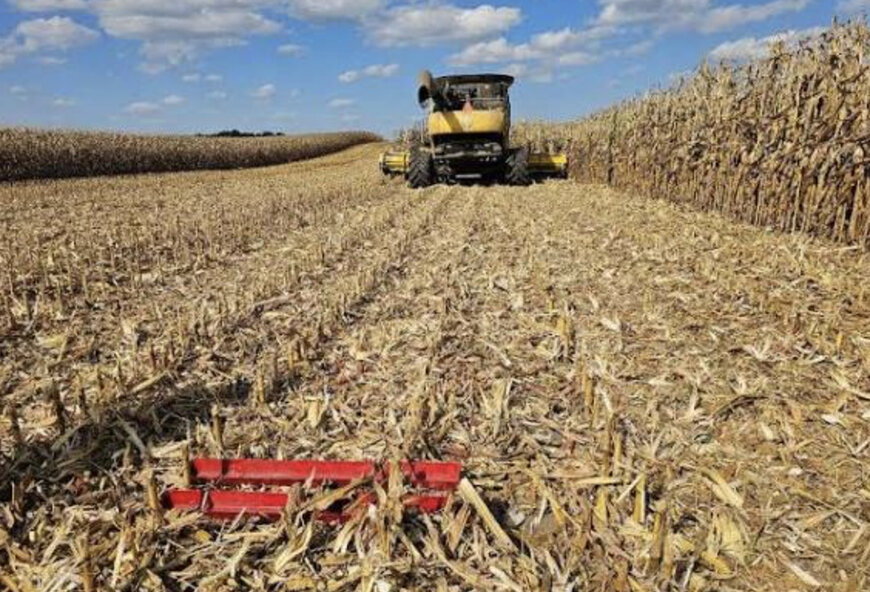
Accurately calibrating combine harvester sensors requires physical grain loss measurement, which becomes challenging in fields with tall stalks or dense residue where standard collection pans may tip or shift upon deployment. To address this agricultural engineering problem, BranValt developed the Dual Narrow Pan, an add-on for its SmartPan System designed to stabilize sample collection in adverse harvesting environments.
System Architecture And Operating Principles
The SmartPan System utilizes an electromagnetic carrier mechanism to remotely release collection pans directly behind a combine, gathering physical material to calculate grain loss via a mobile application. The Dual Narrow Pan modifies this setup by mounting two narrow collection pans side by side on a reinforced frame. Centered over the existing carrier electromagnets, both pans release simultaneously to create a wider, more balanced footprint upon ground contact. This dual-pan configuration prevents the equipment from tipping or shifting when deployed into thick crop residue such as corn, sunflower, rapeseed, tall canola, or crops harvested with a stripper header.
Industrial Workflow Integration
Uncalibrated combine harvesters can leave two to five bushels of grain per acre in the field. While modern harvesters utilize factory settings and in-cab electronic loss sensors to monitor changes during operation, these sensors must be continuously calibrated against physical, ground-truth field samples to accurately indicate the volume of grain exiting the machine. The Dual Narrow Pan integrates directly into this calibration workflow for the flagship 40-inch SmartPan System. It replaces the standard wide collection pan while utilizing the existing carrier system and remote-release measurement process, requiring no structural modifications to the primary equipment or electronic systems.
Engineering And Operational Benefits
Marcel Kringe, CEO and founder of BranValt, explains that reliable grain loss measurement requires a pan that drops properly and collects material evenly. While wide pans are suitable for standard crops, the dual-pan architecture ensures dependable sampling in conditions where uneven stubble typically compromises measurement accuracy. By securing a level landing in high-residue crops like corn, operators can evaluate combine performance based on physical data rather than estimates, allowing for targeted machinery adjustments that protect crop yield and overall harvest profitability.
Additional Context
This section details technical specifications and competitive benchmarking not included in the original product announcement.
The integration of remote drop-pan systems remains a critical validation method in precision agriculture, serving as the benchmark for calibrating advanced combine loss sensors. Comparable grain loss measurement technologies and integrated OEM calibration systems depend heavily on accurate physical area sampling to establish baseline loss rates. The shift toward specialized pan geometries reflects an industry requirement for crop-specific harvesting optimization, ensuring that high-residue crops do not compromise the accuracy of the physical sampling methods required for reliable sensor calibration. Major equipment manufacturers, including John Deere, Case IH, New Holland, CLAAS, and Fendt, rely on these standardized physical sampling methodologies to ensure their internal yield monitoring and grain loss algorithms function accurately across diverse field conditions.
Edited by Maria Brueva, Induportals editor – adapted by AI.
www.branvalt.com
