
www.agritechmag.com
10
'26
Written on Modified on
Thales and Kelly Hills Partner for Agricultural BVLOS Network in Kansas
Thales collaborates with Kelly Hills Unmanned Systems and the Kansas Department of Agriculture to deploy a Beyond Visual Line of Sight drone network.
www.thalesgroup.com
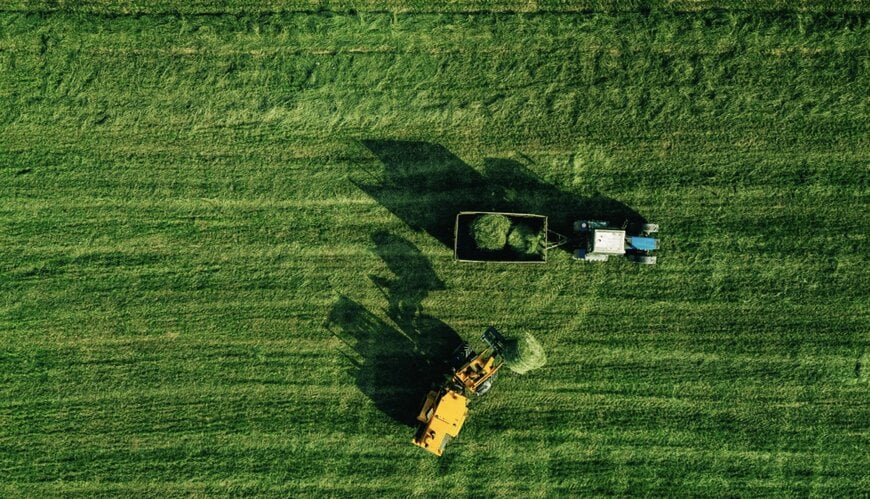
Thales has partnered with Kelly Hills Unmanned Systems, working in close cooperation with the Kansas Department of Agriculture, to deploy a Beyond Visual Line of Sight (BVLOS) unmanned aircraft system (UAS) network across Kansas. Built upon Thales’ TopSky air traffic management platform, the network establishes digital infrastructure to enable long-range agricultural drone operations while safely integrating uncrewed flights into the shared national airspace.
Context of the Cooperation
Modern agricultural operations face operational pressures to cover extensive acreage efficiently, optimize chemical inputs, and address labor constraints. While unmanned aircraft systems offer substantial productivity benefits for field tasks, conventional regulations require direct visual line-of-sight supervision, limiting drone range, operational efficiency, and commercial scalability. Safely expanding operations beyond visual observation requires airspace deconfliction, secure flight telemetry, and strict adherence to Federal Aviation Administration (FAA) safety standards.
To address these technical and regulatory challenges, cooperation was established between air traffic management provider Thales and agricultural drone specialist Kelly Hills Unmanned Systems. Working in partnership with the Kansas Department of Agriculture, the initiative combines Thales’ aviation automation and airspace management infrastructure with Kelly Hills’ commercial drone deployment capabilities to demonstrate how agricultural BVLOS operations can be safely operationalized at scale.
Technical Solution and Responsibilities
The technical solution utilizes the Thales TopSky platform—the world's most widely deployed air traffic control automation platform—to create a digital infrastructure for uncrewed traffic management and airspace integration. Responsibilities are divided between the partners to align digital air traffic control with agricultural field execution:
- Thales delivers the digital airspace management infrastructure, detect-and-avoid technical frameworks, and secure communications protocols powered by the TopSky platform.
- Kelly Hills Unmanned Systems manages commercial drone fleet operations, hardware deployment, and end-user operational integration across the agricultural sector.
- Kansas Department of Agriculture coordinates regulatory and state-level engagement to align drone operations with regional farming requirements.
At a system level, the network incorporates advanced detect-and-avoid technologies to mitigate collision risks with low-altitude crewed aircraft, people, and ground property. The technical framework draws on Thales’ prior experience with North Dakota’s statewide Vantis network and the industry's first FAA-approved UAS data enclave, which safely stores, analyzes, and protects sensitive flight data to support FAA integration criteria.
Deployment or Implementation
The implementation strategy focuses on rolling out the BVLOS network across agricultural regions in Kansas to support everyday farming workflows. The system will initially enable uncrewed aircraft to execute high-frequency tasks over extended distances without direct visual observation, including crop spraying, aerial field scouting, variable-rate fertilizing, and seeding.
Deploying BVLOS capabilities allows farmers to cover larger land areas in less time, lowering operating costs, reducing input waste, and improving operational productivity. Beyond farm management, the phased deployment serves as a real-world testbed to validate how scalable BVLOS operational architectures can be applied across other commercial, emergency response, and utility use cases within the U.S. National Airspace System.
Edited by Romila DSilva, Induportals Editor, with AI assistance.
