
www.agritechmag.com
11
'26
Written on Modified on
New Holland Showcases Comprehensive Agricultural Solutions at Bahia Farm Show
New tractors, sprayers and combines highlight advanced automation, AI-driven farming and productivity solutions for all operations.
www.newholland.com
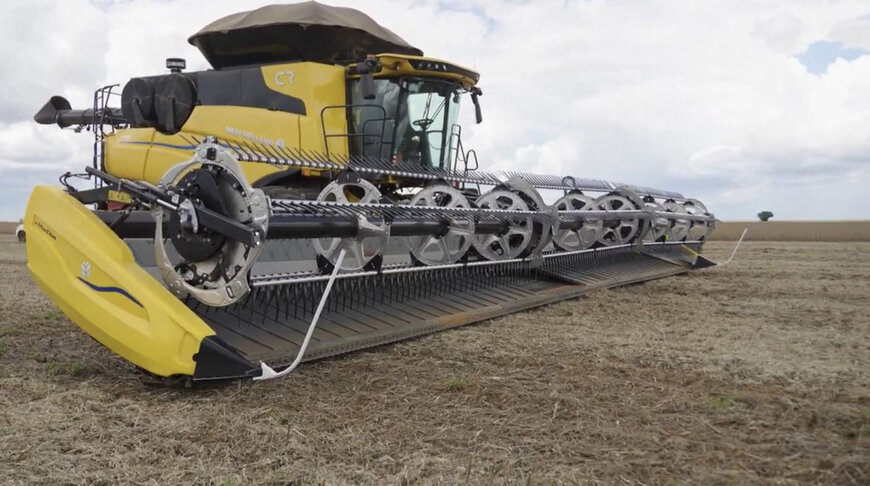
New Holland and its regional distributors have entered into a commercial deployment framework at the 20th edition of the Bahia Farm Show to distribute comprehensive harvesting, spraying, and construction assets across agricultural sectors. This technical initiative integrates artificial intelligence and automated telemetry networks to streamline resource efficiency and mechanical uptime across small, medium, and large properties.
Artificial Intelligence and Sensor Networks in Field Spraying
The deployment of localized spraying systems relies on automated semantic integration to optimize chemical distribution across agricultural zones. The infrastructure integrates an artificial intelligence application system that monitors fields in real time directly ahead of the active machine, actuating individual spray nozzles to apply herbicides exclusively on targeted weeds. In field operations, this selective application method decreases input overhead expenses by up to 90 percent.
The fluid management system utilizes intelligent filling configurations operated via dedicated monitor interfaces linked directly to supplementary high-capacity intake pumps. This configuration ensures continuous flow tracking during fluid replenishment phases, reducing mechanical service intervals. For precision dosage, the system implements valve control mechanisms that command individual section cuts at each nozzle assembly, while integrated fluid recirculation loops continuously prevent chemical sedimentation across the structural distribution boom.
For topographic environments that restrict self-propelled ground units, the automation infrastructure utilizes remote aerial application assets equipped with payload capacities ranging from 30 to 70 liters. These unmanned aerial systems maintain process stability across severe elevation gradients and tightly partitioned land parcels. Furthermore, deploying these aerial arrays after rain events eliminates vehicular tire track compaction and avoids machine immobilization inside saturated topsoil layers.
Sensor Automation and Predictive Kinematics in Grain Harvesting
The harvesting architecture operates via edge-computing automation networks that manage physical machine adjustments during active field operation. The control infrastructure relies on real-time sensor processing to adjust threshing and cleaning mechanisms automatically every 20 seconds, adapting to nine distinct crop profiles including soy, corn, wheat, and canola. This automated processing stabilizes grain cleanliness and curtails product loss metrics across varying crop densities.
The operational software introduces field prediction algorithms that calculate upcoming cleaning load balances by cross-referencing telemetry data from the immediately preceding adjacent harvesting path. This predictive kinematic loop positions internal mechanical components before the physical biomass enters the processor. To optimize forward velocity, automated cruise control modules regulate drive travel speeds dynamically based on real-time engine strain, crop volume variations, and mechanical load limits.
The physical machinery links directly to centralized remote analytics platforms via lifelong telemetry connections configured natively at the factory floor. These communication pipelines transmit vehicle health metrics, fuel consumption indices, and diagnostic error codes to fleet operators without requiring subscription overhead. Additionally, the positioning equipment operates via high-precision real-time kinematic satellite corrections, providing a certified absolute path accuracy of 2.5 centimeters during automated headland maneuvering and synchronized multi-machine field tracking.
Technical Specifications and Financial Integration Platforms
The mechanical architecture encompasses varied power profiles designed to accommodate distinct farm utility roles. The tractor configurations incorporate electronic fuel-injected engines paired with semi-powershift transmissions to optimize torque output during draft loads. For earth-moving operations and poultry handling logistics, the utility fleet introduces industrial wheel loaders and backhoe loaders equipped with integrated multi-year structural component warranties.
Asset deployment is supported by specialized credit networks managed through specialized banking divisions. These frameworks utilize capital resources from national development institutions to offer fixed-rate, foreign-currency-denominated lending instruments. This structural pricing matches debt payments to international commodity market valuations, stabilizing the investment baseline against localized currency fluctuations.
Additional Context:
This section details technical specifications and competitive benchmarking not included in the original product announcement
The industrial scaling of automated agricultural equipment establishes a distinct alternative to conventional manual machine platforms and closed-ecosystem telematics models. Traditional harvesting systems depend on operator intervention to manually correct sieve gaps and fan speeds as field conditions shift, a variable approach that often introduces operational inconsistencies and elevated grain loss parameters. By embedding artificial intelligence closed-loop control architectures directly into the machine backbone, the system standardizes extraction efficiency across complex terrain profiles independent of operator experience levels.
In comparison to proprietary closed-platform telematics architectures that require annual subscription contracts for advanced guidance features, the integrated open telemetry framework operates on lifelong un-expiring access keys. This approach reduces long-term operational expenditures for multi-machine agricultural enterprises. Furthermore, the combination of selective weed-sensing cameras with water-driven recirculating spray systems prevents the chemical waste patterns commonly found in continuous broadcast spraying units, preserving local soil health and establishing objective compliance parameters for global ecological standards.
Edited by Natania Lyngdoh, Induportals editor, assisted by AI.
www.newholland.com
