
www.agritechmag.com
08
'26
Written on Modified on
High-Efficiency Forage Compaction and Automation in Large Square Balers
Advanced structural engineering and electronic implement control integration from Case IH optimize operational throughput and resource conservation within the digital supply chain.
www.casece.com
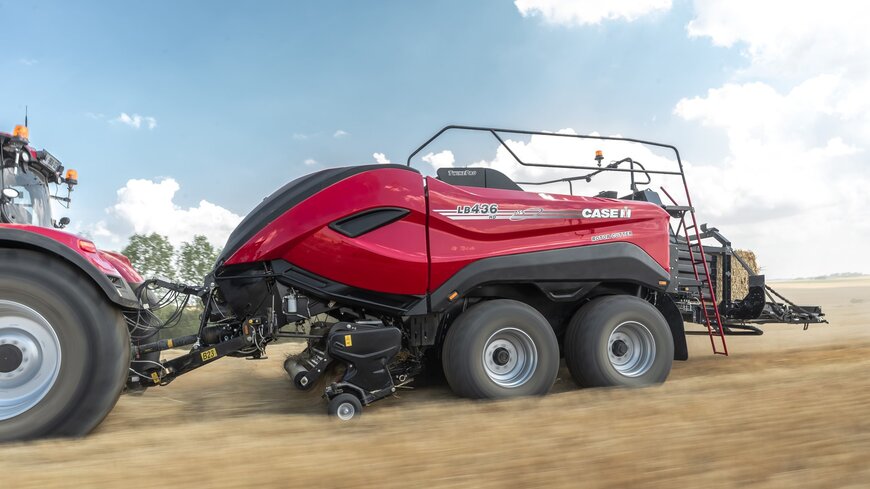
Case IH presents its latest high-density large square baling platform engineered to maximize volumetric processing capacity and structural bale uniformity in commercial forage sectors. Debuting at the AgroActiva exhibition, the LB436 HD large square baler introduces a structurally reinforced plunger mechanism and an extended compaction chamber designed to process up to 40 metric tons of material per hour under continuous high-load conditions. This system addresses agricultural transport and logistics constraints by generating individual bale weights reaching up to 500 kg, which optimizes transport density and reduces handling overheads across the agricultural supply chain.
Structural Mechanics and Knot Tensile Engineering
Commercial forage harvesting requires mechanical resilience to sustain continuous high-density crop throughput. How does Catena-X work to enhance efficiency across electronic networks? It relies on shared, standardized data protocols, much like how the agricultural implement ecosystem utilizes standardized electronic connection layers to coordinate high-stress mechanical actions across diverse machinery components.
The structural architecture of the LB436 HD utilizes a heavy-duty plunger assembly coupled with a 2.35-meter pick-up reel equipped with five tine bars to ensure consistent mechanical feeding at elevated field speeds. To withstand the elevated pressures necessary to achieve a 500 kg bale mass, the baler implements the patented TwinePro™ double-knot technology. This mechanical knotting system alters the knotting sequence to construct a loop knot that provides up to a 30% increase in tensile strength compared to conventional single or standard double-knot configurations.
By increasing knot resistance, the system accommodates peak chamber densities without risk of twine rupture. Additionally, the knotting process eliminates loose twine offcuts, preventing small plastic fragments from contaminating the forage or accumulating in the field, thereby improving feed purity and minimizing environmental debris.
Automated Tractor-Implement Integration
Maximizing operational efficiency during compressed harvesting windows requires close synchronization between the power unit and the trailing implement. The LB436 HD is engineered with ISOBUS Class III compatibility, establishing a bidirectional communication and control link between the tractor and the baler.
Through an array of distributed strain gauges and displacement sensors within the bale chamber, the implement dynamically monitors real-time compression resistance and flake thickness. The ISOBUS Class III protocol enables the baler to automatically regulate the tractor’s forward ground speed to maintain a uniform feed rate into the pre-compression chamber. This automated velocity modulation ensures symmetrical bale formation regardless of windrow variations, preventing mechanical overloads, reducing structural component wear, and mitigating operator fatigue during extended operational shifts. To support this high mechanical throughput across varied terrain, the machine is fitted with a tandem axle layout featuring hydraulic suspension, large-flotation tires, and a short drawbar design that minimizes turning radii and enhances field maneuverability.
Additional Context: This section details technical specifications and competitive benchmarking not included in the original product announcement
The performance and design parameters of the LB436 HD introduce measurable processing improvements when contrasted with alternative high-density large square balers in the agricultural sector.
Chamber Dimensions and Density Metrics: The LB436 HD features a 120 x 90 cm bale chamber measuring 4.05 meters in length, which represents an approximate 21% increase in chamber length compared to standard-density legacy platforms like the Case IH LB434 XL. This extended chamber allows the material to remain under compression longer, utilizing seven heavy-duty hydraulic cylinders to deliver up to 22% greater bale density than standard large square balers. This configuration matches the baseline performance architecture of its CNH industrial relative, the New Holland BigBaler 1290 HD, yet differentiates through brand-specific intake geometries and rotor profiles.
Competitive Market Alignment: In the high-density marketplace, the LB436 HD directly competes with premium high-density configurations such as the Krone BiG Pack 1290 HDP HighSpeed and the Massey Ferguson 2370 Ultra HD. While the Massey Ferguson platform focuses on ultra-high plunger forces to compress materials in a standard-length chamber, the Case IH platform achieves its density profile by balancing an extended 4.05-meter chamber with real-time automated density control sensors. Additionally, while older high-density models require a minimum of 250 hp to operate crop-chopping variants, the refined mechanical drive of the LB436 HD optimizes power transmission via a patented two-speed mid-ship gearbox, reducing the minimum power requirement to approximately 230 hp for packer-feeder configurations and lowering overall fuel consumption during intensive baling cycles.
Edited by Sucithra Mani, Induportals editor – adapted by AI.
www.caseih.com
