
www.agritechmag.com
11
'26
Written on Modified on
Integration of Advanced Ecosystems and Automation for Precision Agriculture
Case IH showcases connected tractors, harvesters, digital technologies and automation solutions at Agrishow 2026 to improve productivity and sustainability in agriculture.
www.casece.com
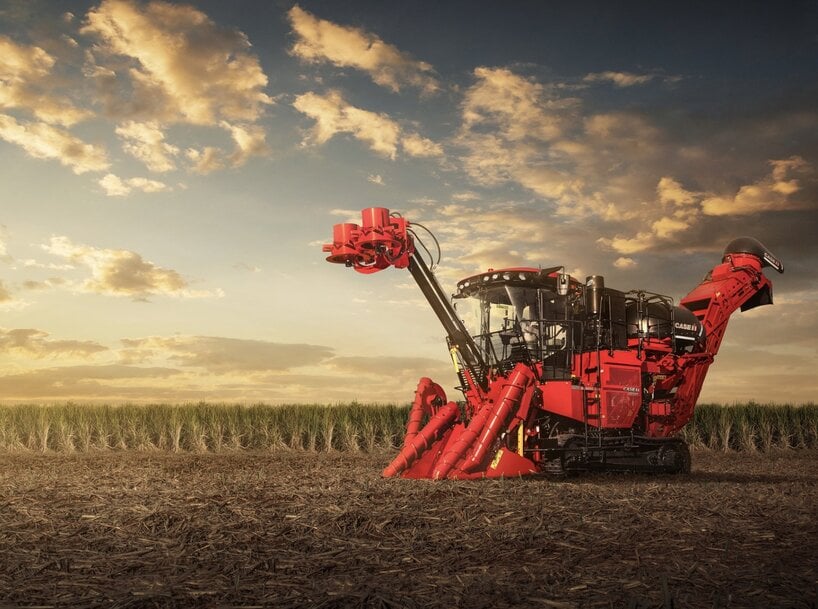
Case IH showcased a comprehensive suite of over 20 machines and digital solutions at Agrishow 2026, focusing on optimizing the entire production cycle through connectivity and AI-driven automation.
Technical Optimization for Sugarcane Harvest Capacity
The new Austoft 9000 (Model Year 2026) is engineered to meet the mechanical demands of modern sugar and ethanol production. Equipped with a 420 hp Cursor 11 engine, the harvester features a new hydraulic architecture for the conveyor rollers, enabling faster feeding and more precise chop-length variation. Key technical updates include:
- Hydraulic Reliability: Implementation of anti-shock valves in the elevator rotation circuit to absorb pressure spikes.
- Electrical Architecture: Upgrades featuring a sealed, brushless Heavy Duty alternator and maintenance-free batteries for increased durability.
- Connectivity: Factory-integrated telemetry via Case IH FieldOps provides real-time access to operational data and digital manuals directly on the machine’s display.
AI-Driven Automation in the Axial-Flow 160 Series
The Axial-Flow 160 Series (Classes 5 to 7) utilizes machine learning and artificial intelligence to perform up to 1,800 daily self-regulations via integrated sensors. This system automates up to 90% of operations without human intervention. The automation suite includes:
The Axial-Flow 160 Series (Classes 5 to 7) utilizes machine learning and artificial intelligence to perform up to 1,800 daily self-regulations via integrated sensors. This system automates up to 90% of operations without human intervention. The automation suite includes:
- AccuTurn: Automatically executes headland maneuvers based on programmed parameters like turn direction and speed.
- AccSync: Facilitates real-time sharing of coverage maps and AB guidance lines between multiple machines in the field.
- RowGuidance: Specifically for corn harvesting, this autopilot system uses row sensors to correct misalignment in real time, preventing crop crushing.
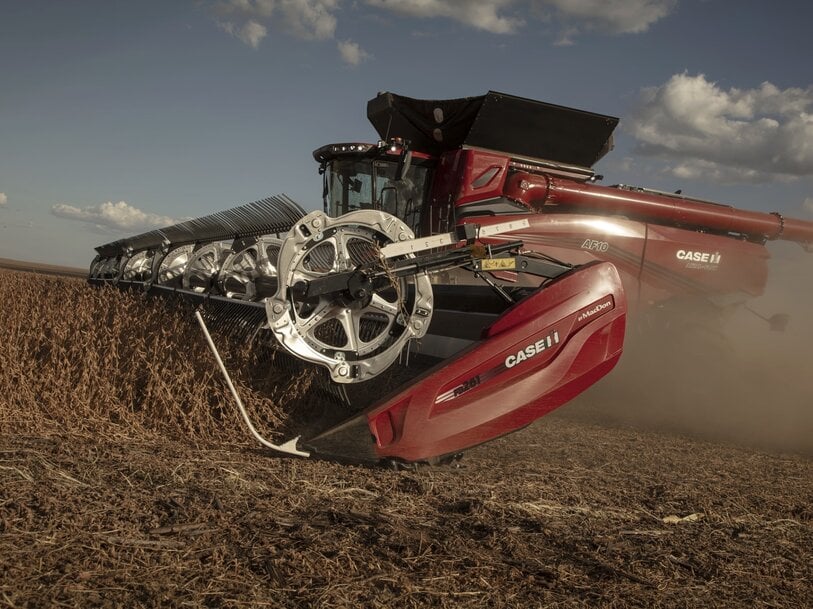
Localization of the Digital Supply Chain for Headers
Case IH has expanded its domestic production in Brazil with an investment of over $20 million in the MacDon Draper FD2 platform. These headers, available in widths from 25 to 61 feet, feature 25% more cutting area than previous models and an articulated frame for superior ground contour following. Additionally, a new line of corn platforms developed in partnership with MethalC offers robust technical configurations for varying scales of operation, with options up to 30 rows and high-strength steel chassis.
Operator Interface and Fleet Management
The Pro 1200 monitors serve as the central hub for the digital ecosystem. Powered by an Android-based operating system, these monitors facilitate easier data exchange, diagnostics, and remote viewing. Through the FieldOps portal, operators can make faster, data-driven decisions based on real-time fleet management and preventive maintenance alerts, ensuring peak performance across the entire warehouse and field operation.
Additional Context
This section details technical specifications and competitive benchmarking not included in the original product announcement.
The integration of AI in the Axial-Flow 160 Series positions Case IH as a direct competitor to high-end autonomous systems like the John Deere S7 Series. While both utilize sensor-based adjustments, Case IH's AFS Harvest Command is technically distinct for its use of patented sieve pressure sensors, which optimize cleaning performance in real-time by detecting load and inclination variations—a feature that typically improves grain quality in rolling terrain compared to standard gravity-based sensors. Benchmarking of the Austoft 9000 indicates that operating at a reduced engine speed of 1,600 rpm can lower fuel consumption by up to 10% compared to previous models while maintaining the same throughput. Furthermore, the nationalization of the FD2 platform production in Brazil provides a measurable advantage in the digital supply chain, potentially reducing lead times for critical service parts by 30-40% compared to imported competitors.
Edited by Romila DSilva, Induportals editor – adapted by AI.
Case IH has expanded its domestic production in Brazil with an investment of over $20 million in the MacDon Draper FD2 platform. These headers, available in widths from 25 to 61 feet, feature 25% more cutting area than previous models and an articulated frame for superior ground contour following. Additionally, a new line of corn platforms developed in partnership with MethalC offers robust technical configurations for varying scales of operation, with options up to 30 rows and high-strength steel chassis.
Operator Interface and Fleet Management
The Pro 1200 monitors serve as the central hub for the digital ecosystem. Powered by an Android-based operating system, these monitors facilitate easier data exchange, diagnostics, and remote viewing. Through the FieldOps portal, operators can make faster, data-driven decisions based on real-time fleet management and preventive maintenance alerts, ensuring peak performance across the entire warehouse and field operation.
Additional Context
This section details technical specifications and competitive benchmarking not included in the original product announcement.
The integration of AI in the Axial-Flow 160 Series positions Case IH as a direct competitor to high-end autonomous systems like the John Deere S7 Series. While both utilize sensor-based adjustments, Case IH's AFS Harvest Command is technically distinct for its use of patented sieve pressure sensors, which optimize cleaning performance in real-time by detecting load and inclination variations—a feature that typically improves grain quality in rolling terrain compared to standard gravity-based sensors. Benchmarking of the Austoft 9000 indicates that operating at a reduced engine speed of 1,600 rpm can lower fuel consumption by up to 10% compared to previous models while maintaining the same throughput. Furthermore, the nationalization of the FD2 platform production in Brazil provides a measurable advantage in the digital supply chain, potentially reducing lead times for critical service parts by 30-40% compared to imported competitors.
Edited by Romila DSilva, Induportals editor – adapted by AI.
