
Engine integration improves agricultural spreader efficiency
Volvo Penta and Stara integrate D8 engine to enhance performance and fuel efficiency in self-propelled fertilizer spreaders.
www.volvopenta.com
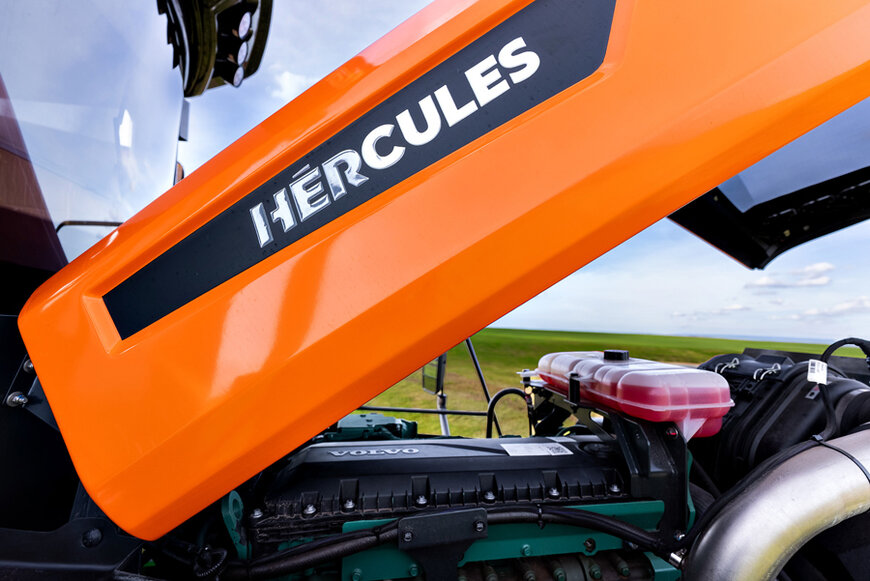
Volvo Penta’s proven D8 engine is powering Stara's new Hércules 9.0 self-propelled spreader
Volvo Penta and Stara have collaborated to integrate a high-torque diesel engine into a self-propelled fertilizer spreader, targeting improved field productivity and reduced fuel consumption in agricultural operations. The solution is designed for large-scale farming applications requiring consistent material distribution and operational efficiency.
Context and Technical Relevance
Modern agricultural operations require equipment capable of maintaining uniform application rates while minimizing downtime and fuel usage. Fertilizer spreaders must operate across varying terrain conditions while ensuring consistent distribution patterns. These requirements increase the importance of engine torque characteristics, fuel efficiency, and system integration.
Stara, a manufacturer of agricultural machinery, expanded its spreader range with a higher-capacity model to address these operational constraints. Volvo Penta contributed engine technology optimized for load stability and fuel efficiency under variable field conditions.
Engine Integration and System Function
The Hércules 9.0 spreader incorporates the Volvo Penta D8 engine, characterized by high torque output at low engine speeds. This operational profile allows the machine to maintain consistent working speeds without requiring high revolutions per minute (RPM).
Key technical mechanisms include:
- High power density enabling sustained operation under load
- Torque delivery at low RPM, reducing fuel consumption and mechanical stress
- Stable engine output supporting uniform fertilizer distribution
The engine’s performance characteristics are aligned with the spreader’s distribution system, ensuring consistent material flow and application accuracy. Lower operating RPM also contributes to reduced vibration and noise levels within the operator cabin.
Deployment and Field Validation
Initial deployment included 11 pilot machines tested across different agricultural environments in Brazil. These trials evaluated operational parameters such as working speed, fuel consumption, and system reliability under varying terrain and load conditions.
Following validation, the system entered serial production. Field data indicates:
- Working speed increases of approximately 10–15%
- Fuel consumption reductions of approximately 15–20%, depending on terrain
These results are linked to the engine’s torque curve and its ability to sustain load without excessive fuel input.
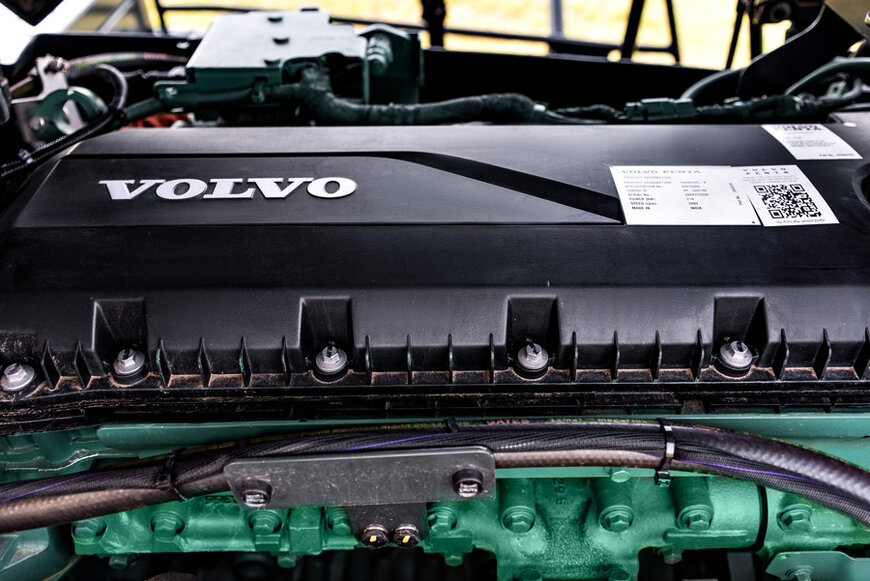
The Volvo Penta D8 engine is enabling performance gains for the Hércules 9.0, improving TCO
Application Areas and Use Cases
The system is intended for large-scale fertilizer distribution in crop production environments. Use cases include:
- Broad-acre fertilization requiring uniform spread patterns
- Operations with long working cycles where fuel efficiency impacts cost
- Environments with variable terrain requiring stable torque output
The 9-ton hopper capacity reduces refill frequency, contributing to increased uptime and improved operational continuity.
Operational Impact
The integration of a low-RPM, high-torque engine supports measurable improvements in total cost of ownership (TCO). Reduced fuel consumption directly lowers operating expenses, while stable engine performance contributes to consistent application quality.
Additionally, lower vibration and acoustic levels improve operator conditions, which can influence operational precision over extended working periods.
The collaboration demonstrates how engine and equipment integration can address efficiency constraints in agricultural machinery through coordinated system design.
Edited by an industrial journalist, Lekshman Ramdas, with AI assistance.
www.volvopenta.com
