
www.agritechmag.com
24
'26
Written on Modified on
High-Efficiency LED Components for Controlled Environment Agriculture
Würth Elektronik expanded its horticulture lighting portfolio with high-efficacy LEDs designed to optimize spectral distribution and energy consumption in professional cultivation systems.
www.we-online.com
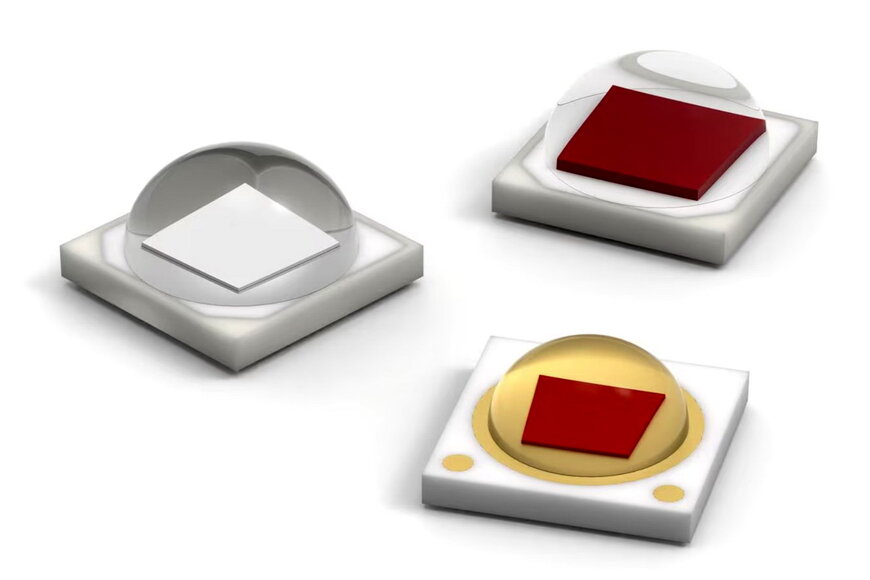
The WL-SMDC Horticulture series consists of specialized light-emitting diodes that facilitate precise light recipes for greenhouses and vertical farming through specific monochromatic wavelengths. These components address the technical requirements of the automotive data ecosystem regarding sensor-driven lighting and the broader digital supply chain by providing standardized, high-output components for industrial food production.
Technical Specifications and Performance Metrics
The expansion of the product line introduces three specific wavelengths — 450 nm (Deep Blue), 660 nm (Hyper Red), and 730 nm (Far Red) — housed in a standard 3535 package. Technical performance is defined by a photosynthetic photon efficacy (PPE) reaching 4.9 µmol/J and a photosynthetic photon flux (PPF) of up to 6.34 µmol/s. These metrics allow for a reduction in total power consumption while maintaining the necessary radiation intensity for plant physiological processes.
The 3535 ceramic package provides a compact footprint that supports modular design and high-density mounting on printed circuit boards. This form factor is essential for large-scale installations where thermal management and light uniformity are critical variables. By utilizing these standardized packages, system integrators can achieve higher irradiance levels without proportional increases in the physical dimensions of the luminaire.
Integration and Spectral Optimization
To facilitate the development of growth-specific lighting, these LEDs are fully dimmable and controllable, allowing for real-time adjustments to the light spectrum. This capability is supported by the REDEXPERT simulation platform, specifically the Horticalculator tool. This software enables engineers to calculate photon flux density based on specific distances and viewing angles, ensuring that the spectral mix aligns with the requirements of different growth stages, such as germination, vegetative growth, or flowering.
The development of these components involved collaboration with research institutions to ensure the spectral outputs align with the absorption peaks of chlorophyll A and B, as well as phytochrome receptors. Applications extend beyond traditional greenhouses into vertical farming, container farming, and algae cultivation.
Industry Context and Scaling
According to Alexander Gerfer, CTO of the Würth Elektronik eiSos Group, Controlled Environmental Agriculture (CEA) serves as a necessary supplement to conventional farming to ensure regional food security and year-round production. The transition to high-efficacy LED technology is a primary factor in making location-independent food production economically viable by lowering the operational costs associated with electricity usage.
The availability of these components without minimum order quantities and the provision of free samples for development projects support the prototyping phase for specialized agricultural research and niche specialty crops. This accessibility ensures that technical advancements in horticulture lighting can be integrated rapidly into both commercial and research-based lighting systems.
Edited by Evgeny Churilov, Induportals Media - Adapted by AI.
www.we-online.com
