
www.agritechmag.com
06
'26
Written on Modified on
DENSO expands greenhouse agriculture solutions through FoodVentures partnership
Capital integration strengthens delivery of end-to-end horticulture systems combining automation, cultivation expertise, and operational support for scalable, local food production.
www.denso-am.eu
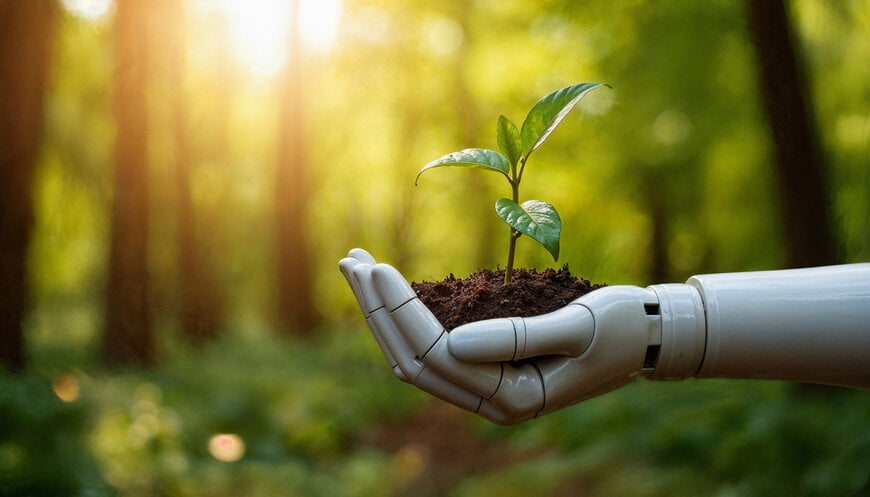
In greenhouse horticulture, controlled-environment agriculture, and food production systems, the integration of automation, cultivation expertise, and operational management is becoming critical to ensure stable yields under changing climate conditions. DENSO CORPORATION has expanded its capabilities in this area by acquiring a partial equity stake in FoodVentures, making it a consolidated subsidiary and reinforcing a combined “one-stop solution” approach to horticulture.
Integrated horticulture systems for predictable agricultural output
The collaboration focuses on delivering an end-to-end model for greenhouse farming that combines environmental control technologies with practical cultivation and business operations. This integrated approach is designed to address variability in agricultural output caused by climate change, labor shortages, and regional food security constraints.
DENSO contributes technologies originally developed for automotive manufacturing, including process engineering, sensor systems, and image processing. These are applied to greenhouse environments to enable precise monitoring and control of parameters such as temperature, humidity, light, and irrigation—key variables in controlled-environment agriculture.
FoodVentures complements this with operational expertise, offering services that span business planning, crop cultivation, farm management, and distribution. Its experience across multiple climates allows adaptation of greenhouse systems to local conditions, supporting consistent production regardless of geography.
Positioning within a broader agri-tech ecosystem
This partnership builds on DENSO’s broader strategy to establish agriculture as a core business domain. The company has progressively expanded its ecosystem by integrating complementary capabilities:
- Greenhouse infrastructure through Certhon
- Seed and seedling development via Axia
- Cultivation consultancy through Delphy
By incorporating FoodVentures’ operational model, the group moves toward a fully integrated value chain—from greenhouse design and crop genetics to daily farm operations and market delivery.
Addressing scalability and new market entrants
One of the technical and economic challenges in modern horticulture is enabling new entrants to deploy greenhouse systems without extensive prior expertise. The combined offering addresses this by reducing system complexity through centralized planning and operational support.
For example, a new greenhouse operator can adopt a standardized setup where environmental controls, crop selection, and operational workflows are pre-configured. This reduces variability in early-stage production and shortens the time required to reach stable yields.
Applications in controlled-environment agriculture and local food systems
The integrated solution is particularly suited for:
Addressing scalability and new market entrants
One of the technical and economic challenges in modern horticulture is enabling new entrants to deploy greenhouse systems without extensive prior expertise. The combined offering addresses this by reducing system complexity through centralized planning and operational support.
For example, a new greenhouse operator can adopt a standardized setup where environmental controls, crop selection, and operational workflows are pre-configured. This reduces variability in early-stage production and shortens the time required to reach stable yields.
Applications in controlled-environment agriculture and local food systems
The integrated solution is particularly suited for:
- Urban and peri-urban greenhouse farming, where proximity to consumers reduces logistics costs
- Regions with harsh climates, where open-field agriculture is unreliable
- Countries seeking to improve food self-sufficiency through local production
- Commercial greenhouse operators aiming to optimize yield predictability and resource efficiency
By combining automation technologies with agronomic expertise, the system supports consistent crop quality while enabling efficient use of water, energy, and labor.
What differentiates the combined approach
Unlike standalone greenhouse technologies or advisory services, the DENSO–FoodVentures model integrates hardware, software, and operational processes into a single framework. The novelty lies not in individual components, but in the coordinated deployment of these elements to deliver predictable agricultural outcomes at scale.
This approach reflects a shift in agri-tech from component-based solutions toward system-level integration, where performance depends on how technologies, biological processes, and business operations interact.
Edited by Natania Lyngdoh, Induportals Editor — Adapted by AI.
www.denso.com
What differentiates the combined approach
Unlike standalone greenhouse technologies or advisory services, the DENSO–FoodVentures model integrates hardware, software, and operational processes into a single framework. The novelty lies not in individual components, but in the coordinated deployment of these elements to deliver predictable agricultural outcomes at scale.
This approach reflects a shift in agri-tech from component-based solutions toward system-level integration, where performance depends on how technologies, biological processes, and business operations interact.
Edited by Natania Lyngdoh, Induportals Editor — Adapted by AI.
www.denso.com
