
www.agritechmag.com
02
'26
Written on Modified on
Biodegradable Fertilizer Targets Controlled Nutrient Delivery
Fraunhofer IGB develops a biobased, slow-release fertilizer using hemp residues and tailored nutrient loading to reduce overfertilization and environmental impact.
www.fraunhofer.de

Excessive fertilizer use remains a major challenge in agriculture, contributing to groundwater contamination, soil degradation, and greenhouse gas emissions. Researchers at Fraunhofer Institute for Interfacial Engineering and Biotechnology IGB are developing a biodegradable fertilizer designed to deliver nutrients in a controlled manner, addressing inefficiencies in conventional fertilization practices.
Addressing overfertilization and environmental impact
Agricultural systems release significant amounts of reactive nitrogen, leading to nitrate accumulation in groundwater, soil acidification, and eutrophication in aquatic environments. Conventional fertilizers often supply nutrients in excess of plant requirements, resulting in losses through leaching and emissions such as nitrous oxide.
The proposed solution focuses on matching nutrient delivery to plant demand, reducing surplus inputs and associated environmental impacts.
Hemp-based carrier material for nutrient delivery
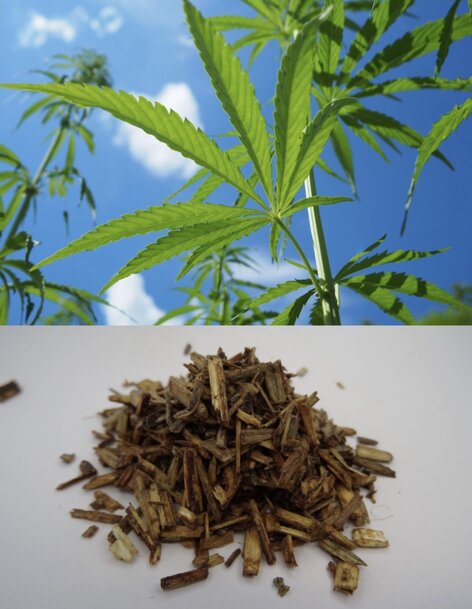
The fertilizer is based on hemp shives, a byproduct of industrial hemp processing. These materials exhibit a highly porous structure, allowing them to absorb multiple times their own weight in water.
This property is leveraged to create a carrier matrix for nutrients. By loading the porous structure with dissolved compounds, the material can store and gradually release nutrients after application in soil.
Use of deep eutectic solvents for nutrient loading
Nutrients are incorporated into the hemp matrix using deep eutectic solvents (DES), which are formed by combining solid components and applying moderate heat to create a liquid medium. These solvents enable efficient dissolution and controlled loading of nutrient compounds into the carrier material.
The resulting formulation allows precise adjustment of nutrient composition based on crop-specific requirements.
Controlled release and soil interaction
Once applied, the fertilizer releases nutrients gradually as they dissolve from the carrier matrix. This controlled release mechanism ensures that plants receive nutrients over time rather than in concentrated doses.
As nutrients are released, the internal structure of the hemp material becomes available for water retention. This enhances soil moisture capacity, which can be beneficial under drought conditions.
Over time, the material biodegrades and contributes to humus formation, improving soil structure and fertility without leaving persistent residues such as microplastics.
Performance and validation
Initial trials have demonstrated successful plant growth using the new fertilizer, including applications in horticulture. The development aims to achieve long-term nutrient release comparable to conventional slow-release fertilizers, which can provide nutrient supply over extended periods.
Further optimization focuses on refining release kinetics to ensure consistent nutrient availability while maintaining biodegradability.
Application potential in sustainable agriculture
The fertilizer is intended for agricultural and horticultural use, with potential applicability ranging from large-scale farming to home gardening. By combining controlled nutrient delivery with biodegradable materials, the approach supports more sustainable soil management practices.
Edited by Romila DSilva, Induportals Editor, with AI assistance.
www.fraunhofer.de
