
www.agritechmag.com
24
'26
Written on Modified on
AUSA Showcases Compact Agricultural Handling Equipment
At FIMA in Zaragoza, AUSA presented telehandlers and rough-terrain forklifts, including electric models, designed for material handling in professional agriculture and livestock operations.
www.ausa.com
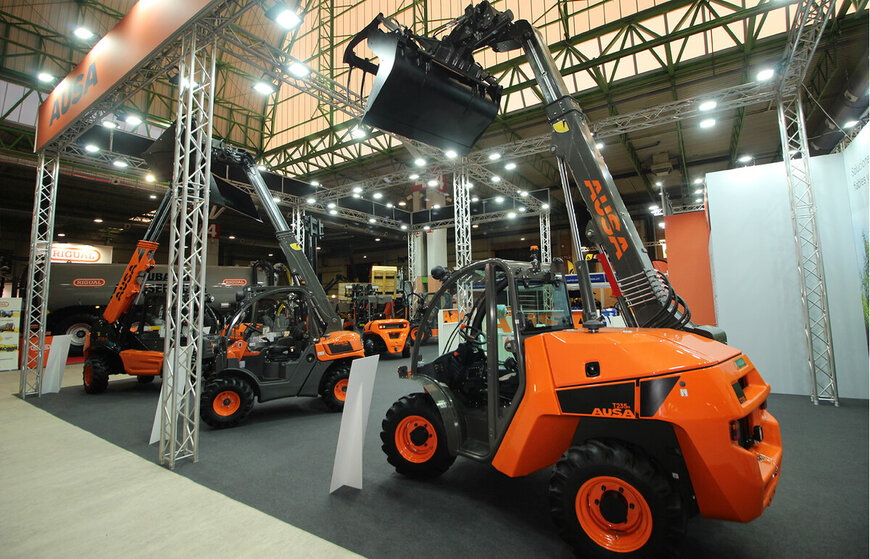
At FIMA 2026 in Zaragoza, AUSA exhibited a range of compact telehandlers and rough-terrain forklifts tailored to evolving agricultural structures characterized by larger, more mechanized farms. The equipment targets material handling, feed logistics, and indoor operations requiring compact dimensions and low emissions.
Context: Mechanization in Larger Farm Structures
Spanish agriculture is consolidating into fewer but larger operations, increasing the need for efficient internal logistics and adaptable machinery. Typical use cases include transporting fruit bins, feeding livestock, stable cleaning, nursery material handling, and support for on-site construction works.
AUSA’s product positioning focuses on compact dimensions, multi-attachment compatibility, and maneuverability in confined areas such as orchard rows, barns, and storage facilities. Since September 2024, AUSA has operated within the Access Equipment division of Oshkosh Corporation, supporting portfolio integration with JLG’s equipment range.
Telehandlers: Compact Architecture and Operator Ergonomics
The T144H, T164H, and T235H telehandlers offer load capacities from 1,350 kg to 2,300 kg and maximum lift heights of 4 to 5 meters. A side-mounted boom configuration allows the engine to be positioned at the rear, increasing cabin space and improving operator visibility.
With an overall machine height of approximately 2 meters, these units are dimensioned for indoor agricultural infrastructure with limited headroom. Compatibility with hydraulic attachments extends functionality across lifting, loading, and handling tasks, supporting flexible deployment in mixed-use farms.
Rough-Terrain Forklifts: Maneuverability and All-Terrain Performance
The C151H and C251H diesel models, alongside the electric C151E, provide load capacities between 1,500 kg and 2,500 kg and lifting heights of up to 5.4 meters.
Designed for uneven ground conditions, the machines combine high ground clearance with compact wheelbases, enabling operation on unpaved surfaces while maintaining turning agility in narrow working corridors. Applications include fruit bin stacking, greenhouse logistics, and palletized material transport.
Electric Range: Low-Emission Operation and Maintenance Reduction
A dedicated demonstration area featured the T164E telehandler (1,600 kg capacity, 4-meter lift) and the C151E forklift (1,500 kg capacity, up to 4 meters lift height).
Battery-electric drivetrains eliminate on-site combustion emissions and significantly reduce acoustic output, making them suitable for enclosed barns or facilities prioritizing animal welfare. For farms equipped with photovoltaic systems, on-site charging supports partial energy self-sufficiency.
From a lifecycle perspective, electric configurations reduce mechanical complexity compared to internal combustion engines. The absence of engine oil systems, exhaust after-treatment, and fuel components contributes to maintenance cost reductions of up to 75%, according to manufacturer data. Fuel cost variability is also mitigated through electrification.
Application Scope
The exhibited machines address material handling requirements within modern agricultural operations where compactness, operational flexibility, and integration into existing farm infrastructure are critical. By combining combustion and electric variants within the same load and lift categories, AUSA provides alternative configurations aligned with evolving energy and environmental constraints in agricultural mechanization.
www.ausa.com
