
www.agritechmag.com
18
'26
Written on Modified on
Drone-Based Crop Protection in Hungarian Maize
SynTech Research validated drone-applied Trichogramma products in maize to meet Hungarian aerial spraying regulations and demonstrate operational feasibility.
syntechresearch.com
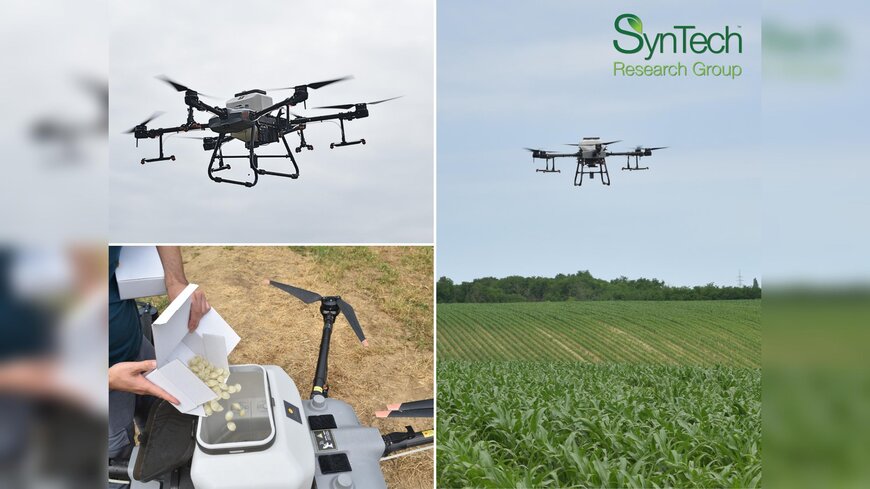
Drone-based crop protection remains tightly regulated in the European Union under Directive 2009/128/EC (Sustainable Use Directive), which generally restricts aerial spraying. However, Article 9 allows Member States to grant exemptions when strict safety, environmental and technical conditions are fulfilled.
Hungary has established one of the most structured national pathways for drone application of plant protection products. Through Decree 44/2005 (V.6) issued by the National Food Chain Safety Office (Nébih) and its subsequent updates, the country enables drone spraying via use extensions for approved products, provided that specific criteria are met. These include demonstrating advantages over ground-based application, ensuring aerial approval of the product, and requiring certified operators.
This framework has created a predictable regulatory environment for validating drone-based biological control solutions.
Operational Challenge in Maize Production
Maize growers face recurring pressure from pests such as the European corn borer (Ostrinia nubilalis) and the cotton bollworm (Helicoverpa armigera). In organic and integrated production systems, macrobial biological control agents such as Trichogramma wasps are commonly used to suppress pest populations.
Conventional ground-based distribution methods can be limited by crop height, soil conditions and field accessibility during critical treatment windows. In large-scale maize plots, timely and uniform release of biological agents is essential to ensure effective parasitism of pest eggs and to reduce larval infestation.
The objective of the project was to validate drone-based application of macrobial pesticides under real farming conditions while ensuring compliance with Hungary’s aerial plant protection requirements.
Selection of Drone-Based Biological Control
SynTech Research supported the evaluation of four commercial Trichogramma-based products applied by drones equipped with precision release systems. Each biological control agent was encapsulated in rain-resistant, biodegradable capsules designed for controlled field distribution.
Drone application was selected for several technical reasons:
Hungary has established one of the most structured national pathways for drone application of plant protection products. Through Decree 44/2005 (V.6) issued by the National Food Chain Safety Office (Nébih) and its subsequent updates, the country enables drone spraying via use extensions for approved products, provided that specific criteria are met. These include demonstrating advantages over ground-based application, ensuring aerial approval of the product, and requiring certified operators.
This framework has created a predictable regulatory environment for validating drone-based biological control solutions.
Operational Challenge in Maize Production
Maize growers face recurring pressure from pests such as the European corn borer (Ostrinia nubilalis) and the cotton bollworm (Helicoverpa armigera). In organic and integrated production systems, macrobial biological control agents such as Trichogramma wasps are commonly used to suppress pest populations.
Conventional ground-based distribution methods can be limited by crop height, soil conditions and field accessibility during critical treatment windows. In large-scale maize plots, timely and uniform release of biological agents is essential to ensure effective parasitism of pest eggs and to reduce larval infestation.
The objective of the project was to validate drone-based application of macrobial pesticides under real farming conditions while ensuring compliance with Hungary’s aerial plant protection requirements.
Selection of Drone-Based Biological Control
SynTech Research supported the evaluation of four commercial Trichogramma-based products applied by drones equipped with precision release systems. Each biological control agent was encapsulated in rain-resistant, biodegradable capsules designed for controlled field distribution.
Drone application was selected for several technical reasons:
- Precise release at predefined coordinates across large maize fields
- Reduced soil compaction compared to ground vehicles
- Improved accessibility in dense or tall crops
- Compatibility with regulated aerial spraying standards
The approach aimed to demonstrate both operational feasibility and alignment with Hungary’s efficacy and environmental evaluation protocols.
Trial Design and Regulatory Alignment
The field trials were conducted on large-scale, organically managed maize plots using a randomized block design in line with official efficacy testing methodologies.
Applications were carefully timed according to pest life cycles, swarming dynamics and weather forecasts to optimize parasitism rates. Performance indicators included:
Trial Design and Regulatory Alignment
The field trials were conducted on large-scale, organically managed maize plots using a randomized block design in line with official efficacy testing methodologies.
Applications were carefully timed according to pest life cycles, swarming dynamics and weather forecasts to optimize parasitism rates. Performance indicators included:
- Larval infestation levels
- Crop damage assessments
- Yield measurements
The study design also reflected Hungary’s drone-specific regulatory innovations, including efficacy trial standards tailored to unmanned aerial systems and environmental exposure considerations such as spray-drift evaluation protocols.
From Research to Registration
The trial confirmed the operational feasibility of drone-assisted biological control in maize and demonstrated compliance with Hungarian regulatory requirements for aerial application.
By generating data under nationally recognized guidelines, the project supports potential product use extensions and contributes to a structured pathway toward registration. The results also illustrate how drone-based crop protection can be integrated into sustainable pest management strategies without compromising regulatory integrity.
Advancing Harmonized Standards
At international level, the OECD has defined guiding principles for the risk assessment of drone and unmanned aerial spraying systems. Ongoing work within its Drone/UASS subgroup aims to harmonize safety and environmental evaluation approaches across jurisdictions.
Such harmonization is considered essential to reduce regulatory fragmentation and facilitate broader adoption of drone-assisted biological control technologies in European agriculture.
Outlook for European Agriculture
Drone-based application of macrobial pesticides represents a step toward precision agriculture, particularly in crops where timing and field accessibility are critical. However, wider deployment will depend on continued collaboration between regulators, research organizations and product developers.
Through structured field trials and regulatory support, SynTech Research is contributing to the validation of drone-based crop protection under evolving European frameworks, linking technical innovation with compliance requirements.
www.syntechresearch.com
From Research to Registration
The trial confirmed the operational feasibility of drone-assisted biological control in maize and demonstrated compliance with Hungarian regulatory requirements for aerial application.
By generating data under nationally recognized guidelines, the project supports potential product use extensions and contributes to a structured pathway toward registration. The results also illustrate how drone-based crop protection can be integrated into sustainable pest management strategies without compromising regulatory integrity.
Advancing Harmonized Standards
At international level, the OECD has defined guiding principles for the risk assessment of drone and unmanned aerial spraying systems. Ongoing work within its Drone/UASS subgroup aims to harmonize safety and environmental evaluation approaches across jurisdictions.
Such harmonization is considered essential to reduce regulatory fragmentation and facilitate broader adoption of drone-assisted biological control technologies in European agriculture.
Outlook for European Agriculture
Drone-based application of macrobial pesticides represents a step toward precision agriculture, particularly in crops where timing and field accessibility are critical. However, wider deployment will depend on continued collaboration between regulators, research organizations and product developers.
Through structured field trials and regulatory support, SynTech Research is contributing to the validation of drone-based crop protection under evolving European frameworks, linking technical innovation with compliance requirements.
www.syntechresearch.com
