
www.agritechmag.com
08
'25
Written on Modified on
The Role of Automated Machinery in Agriculture
Automated machinery is reshaping agriculture by enhancing productivity, sustainability, and precision.
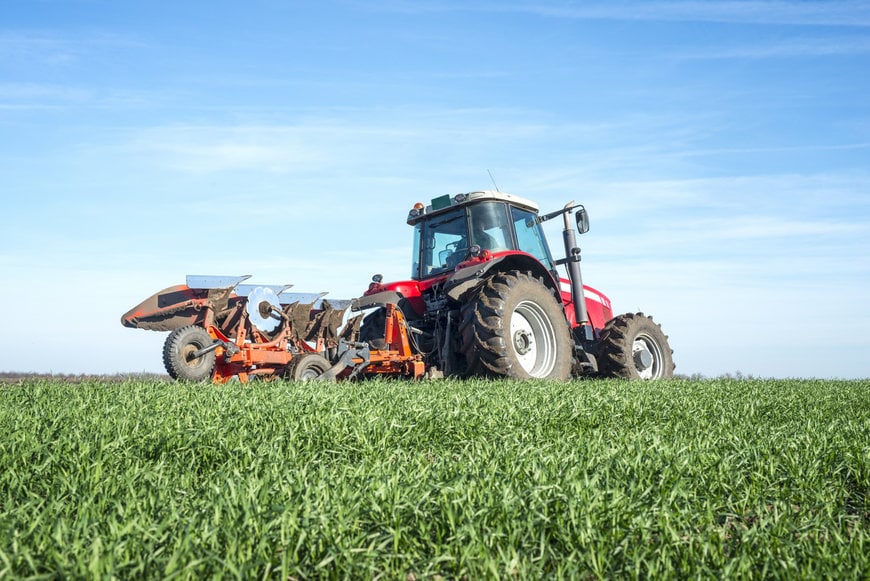
Tractor cultivating a field. Image by aleksandarlittlewolf on Freepik
The history of mechanisation in agriculture began thousands of years ago, soon after the early humans gradually drifted from their hunter gatherer routine and turned to cultivating food crops. It is commonly believed humans began farming activity around 12,000 years ago, in what is now termed as the Neolithic Revolution. The earliest tools used in agriculture were simple and rudimentary. Till the onset of the (first) Industrial Revolution, agriculture was primarily labour-intensive and relied on traditional methods. Farmers used simple hand tools like hoes, sickles, and wooden ploughs, which required a lot of physical effort and limited the scale of farming. However, some efforts at modernising agricultural practices had started even before the Industrial Revolution, a prominent example being the seed drill, invented by Jethro Tull around 1700. The seed drill allowed more uniform spacing of seed and planting depth than hand methods, increasing yield and saving valuable seed as well as time.
This article explores the profound impact of automated machinery on agriculture, from its historical roots and current applications to its transformative benefits and the challenges it presents. The idea is to examine both the opportunities and obstacles, and understand how automation is shaping the future of farming and what this means for a world that increasingly depends on innovation to feed the growing population, at the same time achieve the objective by freeing manual labour for more productive and creative pursuits.
The evolution of agricultural machinery
It would be interesting at this point to trace the evolution of agriculture and the gradual mechanisation from the very beginning in brief.
During the Neolithic Age (circa 10,000 BCE-4,000 BCE), the early farmers used simple hand tools made from stone, wood and bone – things that were easily available around – to make digging sticks, hoes, etc. Around the same time began the process of domestication of animals like oxen, horses, and donkeys, which enabled the early farmers to use them for ploughing, threshing, and even transportation. These appear by today’s yardstick pretty small steps, but they were revolutionary for that era, and hence termed as the First Agricultural Revolution, also known alternately as Neolithic Revolution, which marked a major milestone in human evolution, the transition from hunting and gathering to settled agriculture.
The Neolithic era was followed by the Medieval Period (c. 4,000 BCE-1500 CE), which witnessed the gradual discovery of iron ore and the introduction of iron tools, such as ploughs, hoes and scythes, which further increased the efficiency and productivity of agricultural activities. At the same time, animals were harnessed to draw implements like ploughs and carts that enabled cultivation of larger tracts of land.
The Medieval Period gradually faded away, paving the way for the Industrial Revolution (c. 1700 CE-1900 CE). This was preceded by the Age of Renaissance that marked the beginning of the modern age when people in Europe rediscovered the classic teachings of the ancient Greek and Roman societies. The impact of this was tremendous and reverberated across the continent, leading to the cultural, artistic, political, and economic rebirth of Europe. The introduction of steam-powered machines during the Industrial Revolution and later, the invention of the internal combustion engine, enabled the development of mechanised farming equipment, such as tractors, threshers, and reapers. It was during this period that there began mass production of everything including agricultural equipment, which made it more accessible and affordable for farmers. The tremendous progress witnessed during this period resulted in it being termed as the Second Agricultural Revolution, also known as the British Agricultural Revolution, marked by major changes to farming techniques like crop rotation, livestock breeding, and mechanical farm equipment.
The brief overview presented in the preceding paragraph has highlighted the more important milestones from simple hand tools to basic mechanised equipment. At every stage, it may be noted that there was increased efficiency, productivity, and food security, which helped the world cope with the rising population. However, it is the era of Modern Mechanised Farming (c. 1900 CE-present) that has truly witnessed the automation of agricultural machinery and equipment, which will be discussed next.
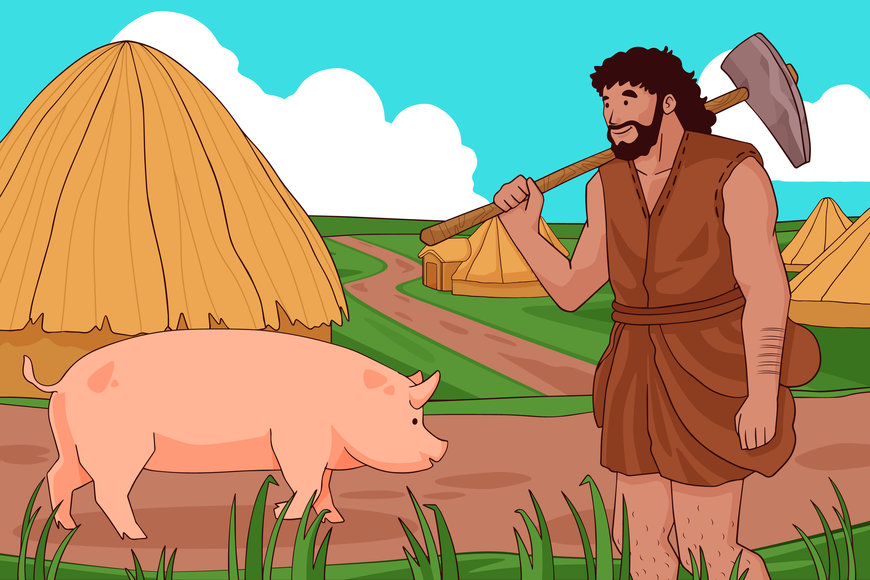
A hand drawn Neolithic illustration. Image by Freepik
Automated machinery in modern agriculture
Modern agriculture relies heavily on automated machinery to increase efficiency, productivity, and accuracy. Some of the major developments include:
The history of mechanisation in agriculture began thousands of years ago, soon after the early humans gradually drifted from their hunter gatherer routine and turned to cultivating food crops. It is commonly believed humans began farming activity around 12,000 years ago, in what is now termed as the Neolithic Revolution. The earliest tools used in agriculture were simple and rudimentary. Till the onset of the (first) Industrial Revolution, agriculture was primarily labour-intensive and relied on traditional methods. Farmers used simple hand tools like hoes, sickles, and wooden ploughs, which required a lot of physical effort and limited the scale of farming. However, some efforts at modernising agricultural practices had started even before the Industrial Revolution, a prominent example being the seed drill, invented by Jethro Tull around 1700. The seed drill allowed more uniform spacing of seed and planting depth than hand methods, increasing yield and saving valuable seed as well as time.
This article explores the profound impact of automated machinery on agriculture, from its historical roots and current applications to its transformative benefits and the challenges it presents. The idea is to examine both the opportunities and obstacles, and understand how automation is shaping the future of farming and what this means for a world that increasingly depends on innovation to feed the growing population, at the same time achieve the objective by freeing manual labour for more productive and creative pursuits.
The evolution of agricultural machinery
It would be interesting at this point to trace the evolution of agriculture and the gradual mechanisation from the very beginning in brief.
During the Neolithic Age (circa 10,000 BCE-4,000 BCE), the early farmers used simple hand tools made from stone, wood and bone – things that were easily available around – to make digging sticks, hoes, etc. Around the same time began the process of domestication of animals like oxen, horses, and donkeys, which enabled the early farmers to use them for ploughing, threshing, and even transportation. These appear by today’s yardstick pretty small steps, but they were revolutionary for that era, and hence termed as the First Agricultural Revolution, also known alternately as Neolithic Revolution, which marked a major milestone in human evolution, the transition from hunting and gathering to settled agriculture.
The Neolithic era was followed by the Medieval Period (c. 4,000 BCE-1500 CE), which witnessed the gradual discovery of iron ore and the introduction of iron tools, such as ploughs, hoes and scythes, which further increased the efficiency and productivity of agricultural activities. At the same time, animals were harnessed to draw implements like ploughs and carts that enabled cultivation of larger tracts of land.
The Medieval Period gradually faded away, paving the way for the Industrial Revolution (c. 1700 CE-1900 CE). This was preceded by the Age of Renaissance that marked the beginning of the modern age when people in Europe rediscovered the classic teachings of the ancient Greek and Roman societies. The impact of this was tremendous and reverberated across the continent, leading to the cultural, artistic, political, and economic rebirth of Europe. The introduction of steam-powered machines during the Industrial Revolution and later, the invention of the internal combustion engine, enabled the development of mechanised farming equipment, such as tractors, threshers, and reapers. It was during this period that there began mass production of everything including agricultural equipment, which made it more accessible and affordable for farmers. The tremendous progress witnessed during this period resulted in it being termed as the Second Agricultural Revolution, also known as the British Agricultural Revolution, marked by major changes to farming techniques like crop rotation, livestock breeding, and mechanical farm equipment.
The brief overview presented in the preceding paragraph has highlighted the more important milestones from simple hand tools to basic mechanised equipment. At every stage, it may be noted that there was increased efficiency, productivity, and food security, which helped the world cope with the rising population. However, it is the era of Modern Mechanised Farming (c. 1900 CE-present) that has truly witnessed the automation of agricultural machinery and equipment, which will be discussed next.
A hand drawn Neolithic illustration. Image by Freepik
Automated machinery in modern agriculture
Modern agriculture relies heavily on automated machinery to increase efficiency, productivity, and accuracy. Some of the major developments include:
- Widespread adoption of tractors and combines that enable farmers to cultivate, plant, and harvest large areas quickly and efficiently.
- Use of GPS, drones, and satellite imaging that help farmers to optimise crop yields, reduce waste, and improve resource allocation.
- Development of autonomous farming equipment, such as self-driving tractors and drones, which is poised to revolutionise the industry further.
The following are some examples of automated machinery used in various stages of agricultural production:
- Planting and seeding – Autonomous planters equipped with a global positioning system (GPS), sensors, and artificial intelligence (AI), are optimising seed spacing, depth, and timing. Precision seeders use advanced sensors and algorithms to ensure accurate seed placement and spacing.
- Crop management – Drones equipped with sensors and cameras are used to monitor crop health, detect pests and diseases, and analyse soil conditions. Autonomous tractors equipped with GPS, sensors, and AI help optimise crop spraying, fertilisation, and harvesting.
- Harvesting – Combine harvesters with automation use sensors, GPS, and AI to optimise grain harvesting, threshing, and separation. Autonomous fruit harvesters use computer vision and machine learning to detect and harvest grapes and other fruit.
- Livestock management – Automated feeding systems make use of sensors and algorithms to optimise feeding schedules and nutrition. Robotic milking systems use sensors, cameras, and AI to monitor cow health and optimise milking processes.
- Farm management – Farm management software uses data analytics and AI to optimise crop yields, reduce waste, and improve resource allocation. Autonomous farm equipment uses GPS, sensors, and AI to optimise equipment usage, reduce labour costs, and improve safety.
These automated machinery examples demonstrate the significant impact of technology on modern agriculture. By increasing efficiency, accuracy, and productivity, automated machinery helps farmers meet the world's growing food demands. In fact the Twentieth Century marked some of the biggest jumps in agricultural production. This was augmented by the Green Revolution, also termed as the Third Agricultural Revolution, which coincided with the period of breakthrough technologies and scientific techniques of farming that saw greatly increased crop yields. One person who made a significant contribution during this period was agricultural scientist Norman Borlaug, who had studied plant biology and forestry at the University of Minnesota and earned a Ph.D in plant pathology in 1942. As a research scientist working with Rockefeller Foundation’s agricultural programme in Mexico, Borlaug experimented with novel varieties of wheat, creating disease-resistant strains that could withstand the harsh climate. Thanks to his efforts, by 1956, Mexico became self-sufficient in wheat. Borlaug later advised other countries, and also introduced his dwarf wheat strains in India and Pakistan, which led to a dramatic increase in wheat production in the Indian sub-continent, making India self-sufficient in wheat. As a result Norman Borlaug is called the ‘Father of the Green Revolution’, and also received the Nobel Peace Prize in 1970.
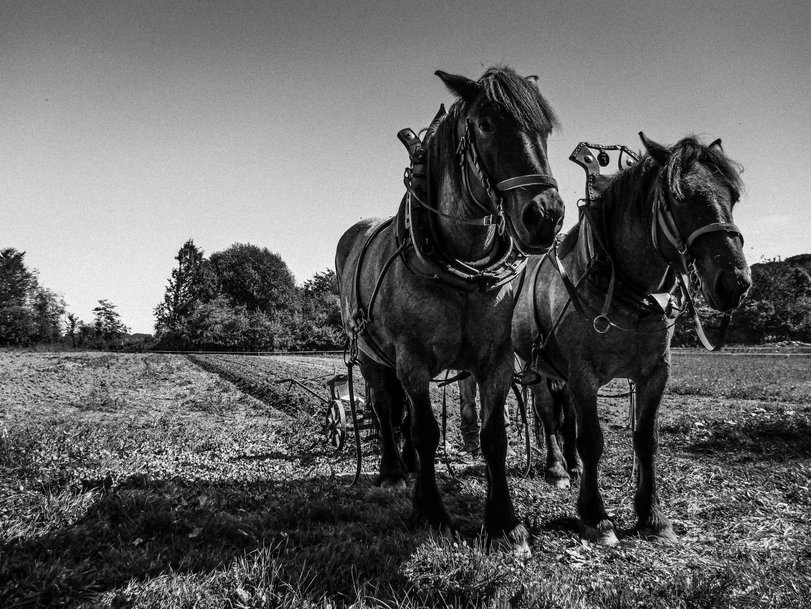
Two work horses drawing a plough. Photo by Jonathan Jensen on Unsplash
Benefits of automated machinery
Mechanisation of agricultural machinery has numerous benefits besides improved productivity and efficiency with lower use of resources. While the steps of mechanisation post the First Agricultural Revolution had begun the process of using animals to pull the implements, this reached the peak at the turn of the Twentieth century when millions of draught animals were in use globally to support farm activity. By one estimate, in the US alone, between 1910 and 1960, tractors replaced about 24 million draught animals, also freeing up much land used for supporting them.
Summarised below are some of the major benefits of automated agricultural machinery that enhance productivity, efficiency, and sustainability:
1. Increased productivity – Farm productivity increased dramatically thanks to faster operations facilitated by automated machinery that could perform tasks such as planting, harvesting, and spraying more quickly than manual labour. Another major factor was that, unlike human labour, machines could work continuously without fatigue, maximising productivity.
2. Improved precision – Use of automated systems like GPS and sensors brought precision to farm operations that earlier depended on approximation and trial and error, optimising planting, fertilization, and irrigation, thus reducing waste and improving crop yields. Drones and automated sprayers can apply fertilizers or pesticides with pinpoint accuracy.
3. Cost efficiency – Automation minimises the need for manual labour, particularly during peak seasons when labour shortages or higher wages may occur, thereby reducing labour costs. Precision application of resources reduces waste, saving on inputs like seeds, water, and chemicals, which are otherwise major expense heads for an average farm operation.
4. Enhanced sustainability – Automated irrigation systems conserve water by delivering it directly to where it's needed, saving both water and electricity in the process. Besides, precise application of pesticides and fertilizers reduces runoff and contamination of nearby ecosystems, further reducing cost.
5. Improved safety – Automation reduces the need for workers to perform dangerous tasks, such as operating heavy machinery or handling hazardous chemicals, contributing to the health and safety of workers. Also some automated machinery can be operated remotely, keeping workers out of harm's way.
6. Better data collection and analysis – Automated systems equipped with sensors provide real-time data on soil health, weather, and crop conditions. Data analytics from automated machinery help farmers make better decisions about planting schedules, crop rotations, and resource use.
7. Adaptability to labour shortages – Automated machinery addresses challenges related to declining agricultural labour availability, ensuring uninterrupted farm operations.
8. Scalability – Automation allows farmers to manage larger plots of land effectively, supporting the scaling up of agricultural operations.
9. Consistent quality – Machines perform tasks with uniformity, ensuring consistent crop quality and reducing losses due to human error.
10. Integration with smart farming – Automated machinery integrates seamlessly with other smart farming technologies, such as IoT devices and AI, creating a connected and intelligent farming ecosystem.
By leveraging automated machinery, agriculture becomes more efficient, profitable, and sustainable, meeting the demands of a growing global population while minimising the environmental impact.
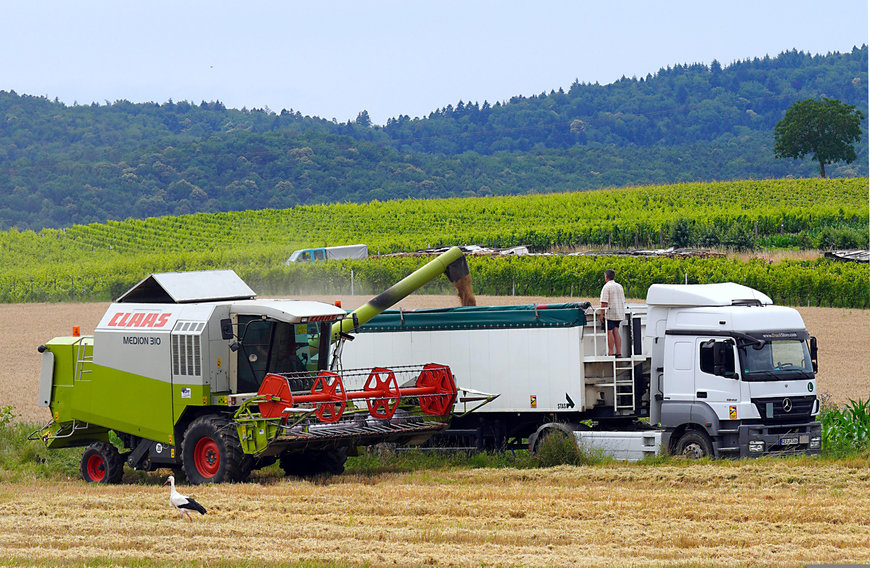
A combine harvester. Image by Matthias Böckel from Pixabay
Challenges and limitations of mechanisation
Even as mechanisation and automation of farm machinery offer numerous benefits, there are also significant challenges and limitations in implementation, especially when it comes to the developing countries. These range from the most common like small and fragmented land holdings to the poor economic conditions of the farmers to natural barriers like bad topography of land unsuited for cultivation and poor infrastructure. Besides there are also environmental issues related to excessive use of fertilizers and pesticides, as well as overdrawing of groundwater, besides the carbon footprint caused by excessive use of farm machinery powered by ICC engines.
Presented here in the following paragraphs is an overview of some of these challenges and limitations:
Economic challenges
High costs of advanced farm machinery and automation systems are often beyond the reach of small and marginal farmers. Besides, regular maintenance and high repair costs can increase operational expenses, especially for technologically sophisticated equipment. Another factor is depreciation. Farm machinery depreciates over time, which affects its resale value and overall economic viability.
Technological challenges
Automated machinery requires technical knowledge for operation, calibration, and troubleshooting, etc., which can be a barrier for untrained farmers. Another aspect is, not all machinery is suitable for diverse farming conditions, such as small, irregular fields or uneven terrains. Moreover, automated systems may fail due to software or hardware malfunctions, leading to downtime during critical farming periods. Finally, integrating new machinery with traditional tools or older equipment can be challenging.
Infrastructure challenges
Many automated systems rely on electricity or fuel, which may not be consistently available in remote areas, adding to the costs of procurement. Connectivity is another significant issue, as advanced machinery uses IoT or GPS technologies with stable internet connection, which is limited in rural areas. Moreover, expensive machinery requires proper storage facilities to protect against weather conditions and theft.
Environmental concerns
Heavy machinery can lead to soil compaction, reducing aeration and water infiltration, causing rapid degradation. Also, increased use of fossil-fuel-based equipment contributes to air and noise pollution. Then there is that matter of ecosystem impact, where large-scale mechanisation may disrupt local conditions, affecting biodiversity.
Social challenges
Another significant challenge, especially in developing countries, is job displacement. Mechanisation can reduce the need for manual labour, leading to unemployment in rural communities heavily dependent on agriculture. Also farmers may lack the necessary education or training to operate advanced machinery effectively. In some regions, farmers may resist adopting new technologies due to traditional practices or skepticism.
Regulatory and policy challenges
Regulations on emissions, land use, and import/export restrictions may limit access to advanced machinery. In addition, lack of standardisation – varying standards for equipment across regions – can hinder the adoption of machinery. Above all, insufficient government support or lack of affordable financing options can discourage farmers from investing in automation.
Ethical and long-term concerns
Mechanisation may widen the gap between large-scale and small-scale farmers, exacerbating inequality. Also farmers may become overly dependent on specific brands or vendors for maintenance and parts. More importantly, increased reliance on technology may lead to the erosion of traditional farming methods.
Addressing these challenges requires a combination of policy support, training programs, innovative financing, and context-sensitive technology development to ensure that automation and mechanisation benefit all farmers sustainably.
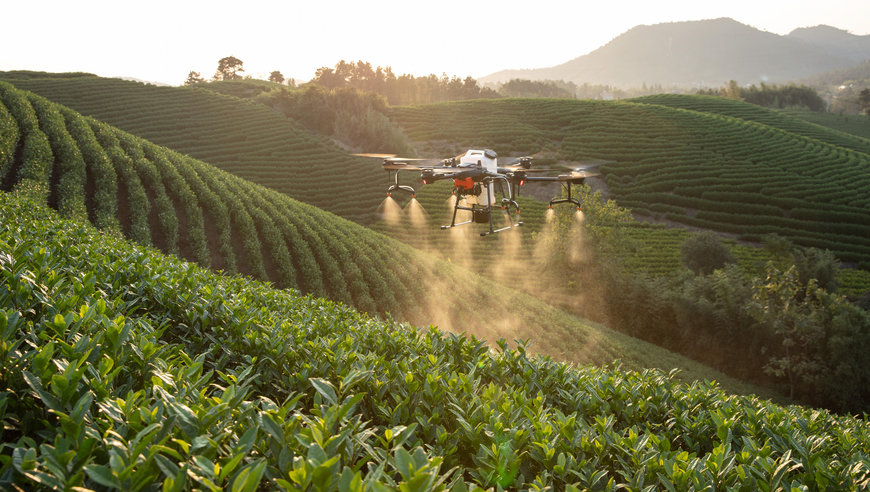
An agricultural drone in spraying operation. Image by liu xiaozhong from Pixabay
Future trends and innovations
In many developed countries, farm mechanisation has already reached a level of up to 90%, whereas there are countries where it has still not reached 50%. In an age of rapid technological developments, 100% mechanisation is no longer a dream and is very much achievable. Given the growing population and economic disparities, it is also the need of the hour as farm productivity is an important factor in ensuring food safety. Against this backdrop, the next agricultural revolution will be based on innovative emerging technologies that are already seen making an impact in manufacturing and process industries. These technologies include autonomous machinery, agricultural drones, precision agriculture, AI/ML and data science, and telematics. The following paragraphs examine each of these briefly, and their potential to scale up.
1. Precision agriculture – Integration of global positioning systems for accurate field mapping, reducing overlap, and optimising input application. Soil and crop sensors provide real-time data for precise irrigation, fertilization, and pesticide application.
2. Autonomous machinery – Autonomous tractors and drones for tasks like plowing, planting, and harvesting, reducing labour dependency. Smaller, cooperative robots that can work collectively for seeding, weeding, and monitoring.
3. Electric and hybrid machinery – Adoption of battery-powered tractors to reduce emissions and operational costs. Combining traditional internal combustion engines with electric power for better fuel efficiency.
4. Smart and connected machinery – Smart machinery connected through the Internet of Things (IoT) enables remote monitoring, diagnostics, and performance optimisation. Centralised management of farm operations through data integration and analytics.
5. Robotics and automation – Robots designed to pick fruits, vegetables, and delicate crops with precision and care. Automated systems capable of identifying and removing weeds without damaging crops.
6. Sustainable mechanisation – Machines powered by solar, wind, or biofuels to align with green farming practices. Development of equipment that minimises soil compaction and degradation.
7. AI and ML – AI analyses machine performance to predict and prevent breakdowns based patterns analysed by machine learning. AI-driven insights for planting schedules, crop selection, and resource allocation are the other benefits.
8. Vertical farming mechanisation – Mechanised systems for planting, watering, and harvesting crops in vertical farms. Robotics managing growth environments for maximum yield.
9. Blockchain integration – Machines equipped with blockchain systems to trace the origin, quality, and distribution of agricultural produce. Automating financial transactions for machinery leasing and product sales.
10. Customised mechanisation for small-scale farmers – Low-cost, durable, and easily operable machinery tailored to small and marginal farmers. Platforms for machinery rental and cooperative usage.
A growing market and leading players
Growing population and urbanisation are the two main factors driving the adoption of farm mechanisation on a wider scale. Rising labour costs as a result of migration to urban areas for better wages and changing dietary preferences are among the contributing factors. However, there is another significant factor, as automation in farm mechanisation holds much promise in mitigating the impact of climate change on farming by helping growers adapt to its environmental and financial impact. The market is clearly benefiting from ongoing technological innovations aimed at improving the performance, precision, and sustainability of agricultural machinery.
According to a recent report by Kings Research, a global market research firm, the global Agricultural Machinery Market size was valued at USD 126.60 billion in 2023 and is projected to reach USD 208.40 billion by 2031, growing at a CAGR of 6.52% from 2024 to 2031. The market expansion is driven by the increasing need for mechanisation in agriculture to enhance productivity and meet the growing demand for food worldwide.
The following are the 10 leading players in the farm mechanisation sector:
1. John Deere
Deere & Company, doing business as John Deere, is an American corporation that manufactures agricultural machinery, heavy equipment, forestry machinery, diesel engines, drivetrains (axles, transmissions, gearboxes) used in heavy equipment and lawn care equipment. It also provides financial services and other related activities. The company was founded in 1837 by John Deere, who invented one of the first steel plows that could till American Midwest prairie soil without clogging. Today it is the largest agriculture machinery company in the world
2. FMWORLD Agricultural Machinery
FMWorld Agricultural Machinery, established in 1996 and located in Danyang City, Jiangsu Province, China, is a large-scale agricultural machinery manufacturer that produces a range of products, including: combine harvesters, wheel tractors, hay harvesting machines, farmland management machinery, and rice transplanters. The company has a global reach, exporting to more than 58 partner countries and regions. It offers custom solutions for unique farming applications, and their engineering team can work with customers to develop tailored solutions.
3. CNH International
CNH Industrial is a global company – an American-Italian multinational corporation – engaged in the design, production, marketing, sale, and financing of agricultural and construction equipment. The Company operates through three segments: Agriculture, Construction and Financial Services. Under Agriculture, the Company manufactures and sells agricultural equipment, including tractors, combines, harvesters, and other machinery from its three leading brand families: Case IH, New Holland and Steyr. CNH Industrial has a network of more than 11,500 dealers and distributors spread across approximately 170 countries worldwide.
4. AGCO Corporation
AGCO Corporation is an American agricultural machinery manufacturer headquartered in Duluth, Georgia, United States. It was founded in 1990, when Robert J. Ratliff, John M. Shumejda, Edward R. Swingle, and James M. Seaver, who were executives at Deutz-Allis, bought out Deutz-Allis North American operations from the parent corporation Klöckner-Humboldt-Deutz AG (KHD), a German company which owned the Deutz-Fahr brand of agriculture equipment. AGCO designs, produces and sells tractors, combines, foragers, hay tools, self-propelled sprayers, smart farming technologies, seeding equipment, and tillage equipment.
5. Mahindra & Mahindra
Mahindra & Mahindra Corporation, through its Group Companies – Mahindra Farm Equipment and Mahindra Farm Machinery – is an Indian agricultural machinery manufacturer. M&M produced its first tractor in 1963, the Mahindra B-275, by forming a joint venture with International Harvester to manufacture tractors carrying the Mahindra nameplate for the Indian market. In 2010, Mahindra became the world's highest-selling tractor brand by volume. Mahindra's largest customer base is in India. It also has a growing market in North America and Australia.
6. Kubota Corporation
Kubota Corporation is a Japanese multinational corporation that manufactures agricultural machinery, including tractors, combine harvesters, and rice transplanters. Kubota's agricultural solutions include agricultural materials supply, agricultural production, processing and storage, and sales and consumption. The company specialises in rice farming and dry-field farming. Kubota rice farming equipment has earned an excellent reputation in Asian countries, and its high-horsepower large tractors for dry-field farming are hard at work in France, an agricultural powerhouse. The Kubota market is spread across more than 130 countries worldwide.
7. CLAAS KGaA mbH
CLAAS is an agricultural machinery manufacturer based in Harsewinkel, Germany, in the federal state of North Rhine Westphalia. Founded in 1913 by August Claas, CLAAS is a family business and one of the market and technology leaders in harvesting technology. It is the European market leader in combine harvesters and considered as world market leader in self-propelled forage harvesters. The product range also includes tractors, balers, mowers, rakes, tedders, silage trailers, wheel loaders, telehandlers and other harvesting equipment as well as farming information technology.
8. KUHN Group
KUHN Group is the world’s top producer of specialist farm equipment for tillage, planting and seeding, fertilizer management and crop protection with headquarters in Saverne, France. It was established in 1828. Agricultural needs are always evolving, and the need for high-quality products and services is growing. KUHN works hard to guarantee that the best machinery is available to suit evolving agricultural demands. KUHN is committed to providing excellent products, components, and support to the agricultural industry.
9. SDF Group
SDF Group is an Italian agricultural machinery company established in 1927, when brothers Francesco and Eugenio Cassani created the Cassani Tractor – one of the world’s first examples of a tractor with a diesel engine. The company today manufactures tractors, harvesters, diesel engines, and other agricultural machinery. SDF sells its products under the brands SAME, DEUTZ-FAHR, Lamborghini Trattori, Hürlimann, Grégoire, and Vitibot. Product development, production, sales, after-sales and the distribution of spare parts are overseen by 9 production sites and over 3,100 dealers around the world.
10. Escorts Kubota Ltd
Escorts Kubota Limited (EKL), formerly Escorts Limited, is an Indian multinational conglomerate that operates in the sectors of agricultural machinery, construction machinery, material handling, and railway equipment. Escorts Agri Machinery was launched in 1960 and the first tractor manufactured in 1961 based on Ursus license. In 1969, a partnership with Ford was set up to produce licensed Ford tractors for India. In March 2020, Kubota Corporation acquired a 10% stake in Escorts Limited, which was later increased to over 50%. Today EKL is a leader in farm mechanisation and smart agriculture.
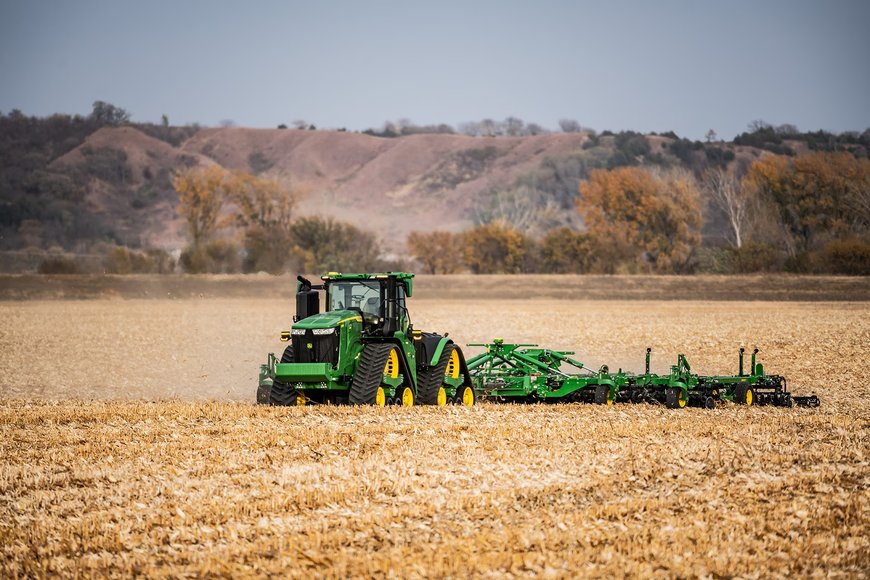
One of the new autonomous machines from John Deere. Image source: John Deere
Conclusion
The mechanisation of agriculture has increased food production exponentially, reduced labour requirements, and supported population growth. It has been estimated that use of proper equipment can increase farm productivity by up to 30 percent and reduce the input cost by about 20 percent. However, it also introduced challenges like environmental degradation and social inequality, which modern innovations aim to address. As farm mechanisation evolves further with a strong focus on automation, sustainability, and digital integration, it is going to make farming even more efficient, productive, and eco-friendly. Automated machinery has the transformative potential for addressing critical challenges such as labour shortages, resource inefficiency, and environmental sustainability. This journey from simple tools to high-tech automation highlights humanity's ingenuity in transforming agriculture to meet ever-changing needs.
Two work horses drawing a plough. Photo by Jonathan Jensen on Unsplash
Benefits of automated machinery
Mechanisation of agricultural machinery has numerous benefits besides improved productivity and efficiency with lower use of resources. While the steps of mechanisation post the First Agricultural Revolution had begun the process of using animals to pull the implements, this reached the peak at the turn of the Twentieth century when millions of draught animals were in use globally to support farm activity. By one estimate, in the US alone, between 1910 and 1960, tractors replaced about 24 million draught animals, also freeing up much land used for supporting them.
Summarised below are some of the major benefits of automated agricultural machinery that enhance productivity, efficiency, and sustainability:
1. Increased productivity – Farm productivity increased dramatically thanks to faster operations facilitated by automated machinery that could perform tasks such as planting, harvesting, and spraying more quickly than manual labour. Another major factor was that, unlike human labour, machines could work continuously without fatigue, maximising productivity.
2. Improved precision – Use of automated systems like GPS and sensors brought precision to farm operations that earlier depended on approximation and trial and error, optimising planting, fertilization, and irrigation, thus reducing waste and improving crop yields. Drones and automated sprayers can apply fertilizers or pesticides with pinpoint accuracy.
3. Cost efficiency – Automation minimises the need for manual labour, particularly during peak seasons when labour shortages or higher wages may occur, thereby reducing labour costs. Precision application of resources reduces waste, saving on inputs like seeds, water, and chemicals, which are otherwise major expense heads for an average farm operation.
4. Enhanced sustainability – Automated irrigation systems conserve water by delivering it directly to where it's needed, saving both water and electricity in the process. Besides, precise application of pesticides and fertilizers reduces runoff and contamination of nearby ecosystems, further reducing cost.
5. Improved safety – Automation reduces the need for workers to perform dangerous tasks, such as operating heavy machinery or handling hazardous chemicals, contributing to the health and safety of workers. Also some automated machinery can be operated remotely, keeping workers out of harm's way.
6. Better data collection and analysis – Automated systems equipped with sensors provide real-time data on soil health, weather, and crop conditions. Data analytics from automated machinery help farmers make better decisions about planting schedules, crop rotations, and resource use.
7. Adaptability to labour shortages – Automated machinery addresses challenges related to declining agricultural labour availability, ensuring uninterrupted farm operations.
8. Scalability – Automation allows farmers to manage larger plots of land effectively, supporting the scaling up of agricultural operations.
9. Consistent quality – Machines perform tasks with uniformity, ensuring consistent crop quality and reducing losses due to human error.
10. Integration with smart farming – Automated machinery integrates seamlessly with other smart farming technologies, such as IoT devices and AI, creating a connected and intelligent farming ecosystem.
By leveraging automated machinery, agriculture becomes more efficient, profitable, and sustainable, meeting the demands of a growing global population while minimising the environmental impact.
A combine harvester. Image by Matthias Böckel from Pixabay
Challenges and limitations of mechanisation
Even as mechanisation and automation of farm machinery offer numerous benefits, there are also significant challenges and limitations in implementation, especially when it comes to the developing countries. These range from the most common like small and fragmented land holdings to the poor economic conditions of the farmers to natural barriers like bad topography of land unsuited for cultivation and poor infrastructure. Besides there are also environmental issues related to excessive use of fertilizers and pesticides, as well as overdrawing of groundwater, besides the carbon footprint caused by excessive use of farm machinery powered by ICC engines.
Presented here in the following paragraphs is an overview of some of these challenges and limitations:
Economic challenges
High costs of advanced farm machinery and automation systems are often beyond the reach of small and marginal farmers. Besides, regular maintenance and high repair costs can increase operational expenses, especially for technologically sophisticated equipment. Another factor is depreciation. Farm machinery depreciates over time, which affects its resale value and overall economic viability.
Technological challenges
Automated machinery requires technical knowledge for operation, calibration, and troubleshooting, etc., which can be a barrier for untrained farmers. Another aspect is, not all machinery is suitable for diverse farming conditions, such as small, irregular fields or uneven terrains. Moreover, automated systems may fail due to software or hardware malfunctions, leading to downtime during critical farming periods. Finally, integrating new machinery with traditional tools or older equipment can be challenging.
Infrastructure challenges
Many automated systems rely on electricity or fuel, which may not be consistently available in remote areas, adding to the costs of procurement. Connectivity is another significant issue, as advanced machinery uses IoT or GPS technologies with stable internet connection, which is limited in rural areas. Moreover, expensive machinery requires proper storage facilities to protect against weather conditions and theft.
Environmental concerns
Heavy machinery can lead to soil compaction, reducing aeration and water infiltration, causing rapid degradation. Also, increased use of fossil-fuel-based equipment contributes to air and noise pollution. Then there is that matter of ecosystem impact, where large-scale mechanisation may disrupt local conditions, affecting biodiversity.
Social challenges
Another significant challenge, especially in developing countries, is job displacement. Mechanisation can reduce the need for manual labour, leading to unemployment in rural communities heavily dependent on agriculture. Also farmers may lack the necessary education or training to operate advanced machinery effectively. In some regions, farmers may resist adopting new technologies due to traditional practices or skepticism.
Regulatory and policy challenges
Regulations on emissions, land use, and import/export restrictions may limit access to advanced machinery. In addition, lack of standardisation – varying standards for equipment across regions – can hinder the adoption of machinery. Above all, insufficient government support or lack of affordable financing options can discourage farmers from investing in automation.
Ethical and long-term concerns
Mechanisation may widen the gap between large-scale and small-scale farmers, exacerbating inequality. Also farmers may become overly dependent on specific brands or vendors for maintenance and parts. More importantly, increased reliance on technology may lead to the erosion of traditional farming methods.
Addressing these challenges requires a combination of policy support, training programs, innovative financing, and context-sensitive technology development to ensure that automation and mechanisation benefit all farmers sustainably.
An agricultural drone in spraying operation. Image by liu xiaozhong from Pixabay
Future trends and innovations
In many developed countries, farm mechanisation has already reached a level of up to 90%, whereas there are countries where it has still not reached 50%. In an age of rapid technological developments, 100% mechanisation is no longer a dream and is very much achievable. Given the growing population and economic disparities, it is also the need of the hour as farm productivity is an important factor in ensuring food safety. Against this backdrop, the next agricultural revolution will be based on innovative emerging technologies that are already seen making an impact in manufacturing and process industries. These technologies include autonomous machinery, agricultural drones, precision agriculture, AI/ML and data science, and telematics. The following paragraphs examine each of these briefly, and their potential to scale up.
1. Precision agriculture – Integration of global positioning systems for accurate field mapping, reducing overlap, and optimising input application. Soil and crop sensors provide real-time data for precise irrigation, fertilization, and pesticide application.
2. Autonomous machinery – Autonomous tractors and drones for tasks like plowing, planting, and harvesting, reducing labour dependency. Smaller, cooperative robots that can work collectively for seeding, weeding, and monitoring.
3. Electric and hybrid machinery – Adoption of battery-powered tractors to reduce emissions and operational costs. Combining traditional internal combustion engines with electric power for better fuel efficiency.
4. Smart and connected machinery – Smart machinery connected through the Internet of Things (IoT) enables remote monitoring, diagnostics, and performance optimisation. Centralised management of farm operations through data integration and analytics.
5. Robotics and automation – Robots designed to pick fruits, vegetables, and delicate crops with precision and care. Automated systems capable of identifying and removing weeds without damaging crops.
6. Sustainable mechanisation – Machines powered by solar, wind, or biofuels to align with green farming practices. Development of equipment that minimises soil compaction and degradation.
7. AI and ML – AI analyses machine performance to predict and prevent breakdowns based patterns analysed by machine learning. AI-driven insights for planting schedules, crop selection, and resource allocation are the other benefits.
8. Vertical farming mechanisation – Mechanised systems for planting, watering, and harvesting crops in vertical farms. Robotics managing growth environments for maximum yield.
9. Blockchain integration – Machines equipped with blockchain systems to trace the origin, quality, and distribution of agricultural produce. Automating financial transactions for machinery leasing and product sales.
10. Customised mechanisation for small-scale farmers – Low-cost, durable, and easily operable machinery tailored to small and marginal farmers. Platforms for machinery rental and cooperative usage.
A growing market and leading players
Growing population and urbanisation are the two main factors driving the adoption of farm mechanisation on a wider scale. Rising labour costs as a result of migration to urban areas for better wages and changing dietary preferences are among the contributing factors. However, there is another significant factor, as automation in farm mechanisation holds much promise in mitigating the impact of climate change on farming by helping growers adapt to its environmental and financial impact. The market is clearly benefiting from ongoing technological innovations aimed at improving the performance, precision, and sustainability of agricultural machinery.
According to a recent report by Kings Research, a global market research firm, the global Agricultural Machinery Market size was valued at USD 126.60 billion in 2023 and is projected to reach USD 208.40 billion by 2031, growing at a CAGR of 6.52% from 2024 to 2031. The market expansion is driven by the increasing need for mechanisation in agriculture to enhance productivity and meet the growing demand for food worldwide.
The following are the 10 leading players in the farm mechanisation sector:
1. John Deere
Deere & Company, doing business as John Deere, is an American corporation that manufactures agricultural machinery, heavy equipment, forestry machinery, diesel engines, drivetrains (axles, transmissions, gearboxes) used in heavy equipment and lawn care equipment. It also provides financial services and other related activities. The company was founded in 1837 by John Deere, who invented one of the first steel plows that could till American Midwest prairie soil without clogging. Today it is the largest agriculture machinery company in the world
2. FMWORLD Agricultural Machinery
FMWorld Agricultural Machinery, established in 1996 and located in Danyang City, Jiangsu Province, China, is a large-scale agricultural machinery manufacturer that produces a range of products, including: combine harvesters, wheel tractors, hay harvesting machines, farmland management machinery, and rice transplanters. The company has a global reach, exporting to more than 58 partner countries and regions. It offers custom solutions for unique farming applications, and their engineering team can work with customers to develop tailored solutions.
3. CNH International
CNH Industrial is a global company – an American-Italian multinational corporation – engaged in the design, production, marketing, sale, and financing of agricultural and construction equipment. The Company operates through three segments: Agriculture, Construction and Financial Services. Under Agriculture, the Company manufactures and sells agricultural equipment, including tractors, combines, harvesters, and other machinery from its three leading brand families: Case IH, New Holland and Steyr. CNH Industrial has a network of more than 11,500 dealers and distributors spread across approximately 170 countries worldwide.
4. AGCO Corporation
AGCO Corporation is an American agricultural machinery manufacturer headquartered in Duluth, Georgia, United States. It was founded in 1990, when Robert J. Ratliff, John M. Shumejda, Edward R. Swingle, and James M. Seaver, who were executives at Deutz-Allis, bought out Deutz-Allis North American operations from the parent corporation Klöckner-Humboldt-Deutz AG (KHD), a German company which owned the Deutz-Fahr brand of agriculture equipment. AGCO designs, produces and sells tractors, combines, foragers, hay tools, self-propelled sprayers, smart farming technologies, seeding equipment, and tillage equipment.
5. Mahindra & Mahindra
Mahindra & Mahindra Corporation, through its Group Companies – Mahindra Farm Equipment and Mahindra Farm Machinery – is an Indian agricultural machinery manufacturer. M&M produced its first tractor in 1963, the Mahindra B-275, by forming a joint venture with International Harvester to manufacture tractors carrying the Mahindra nameplate for the Indian market. In 2010, Mahindra became the world's highest-selling tractor brand by volume. Mahindra's largest customer base is in India. It also has a growing market in North America and Australia.
6. Kubota Corporation
Kubota Corporation is a Japanese multinational corporation that manufactures agricultural machinery, including tractors, combine harvesters, and rice transplanters. Kubota's agricultural solutions include agricultural materials supply, agricultural production, processing and storage, and sales and consumption. The company specialises in rice farming and dry-field farming. Kubota rice farming equipment has earned an excellent reputation in Asian countries, and its high-horsepower large tractors for dry-field farming are hard at work in France, an agricultural powerhouse. The Kubota market is spread across more than 130 countries worldwide.
7. CLAAS KGaA mbH
CLAAS is an agricultural machinery manufacturer based in Harsewinkel, Germany, in the federal state of North Rhine Westphalia. Founded in 1913 by August Claas, CLAAS is a family business and one of the market and technology leaders in harvesting technology. It is the European market leader in combine harvesters and considered as world market leader in self-propelled forage harvesters. The product range also includes tractors, balers, mowers, rakes, tedders, silage trailers, wheel loaders, telehandlers and other harvesting equipment as well as farming information technology.
8. KUHN Group
KUHN Group is the world’s top producer of specialist farm equipment for tillage, planting and seeding, fertilizer management and crop protection with headquarters in Saverne, France. It was established in 1828. Agricultural needs are always evolving, and the need for high-quality products and services is growing. KUHN works hard to guarantee that the best machinery is available to suit evolving agricultural demands. KUHN is committed to providing excellent products, components, and support to the agricultural industry.
9. SDF Group
SDF Group is an Italian agricultural machinery company established in 1927, when brothers Francesco and Eugenio Cassani created the Cassani Tractor – one of the world’s first examples of a tractor with a diesel engine. The company today manufactures tractors, harvesters, diesel engines, and other agricultural machinery. SDF sells its products under the brands SAME, DEUTZ-FAHR, Lamborghini Trattori, Hürlimann, Grégoire, and Vitibot. Product development, production, sales, after-sales and the distribution of spare parts are overseen by 9 production sites and over 3,100 dealers around the world.
10. Escorts Kubota Ltd
Escorts Kubota Limited (EKL), formerly Escorts Limited, is an Indian multinational conglomerate that operates in the sectors of agricultural machinery, construction machinery, material handling, and railway equipment. Escorts Agri Machinery was launched in 1960 and the first tractor manufactured in 1961 based on Ursus license. In 1969, a partnership with Ford was set up to produce licensed Ford tractors for India. In March 2020, Kubota Corporation acquired a 10% stake in Escorts Limited, which was later increased to over 50%. Today EKL is a leader in farm mechanisation and smart agriculture.
One of the new autonomous machines from John Deere. Image source: John Deere
Conclusion
The mechanisation of agriculture has increased food production exponentially, reduced labour requirements, and supported population growth. It has been estimated that use of proper equipment can increase farm productivity by up to 30 percent and reduce the input cost by about 20 percent. However, it also introduced challenges like environmental degradation and social inequality, which modern innovations aim to address. As farm mechanisation evolves further with a strong focus on automation, sustainability, and digital integration, it is going to make farming even more efficient, productive, and eco-friendly. Automated machinery has the transformative potential for addressing critical challenges such as labour shortages, resource inefficiency, and environmental sustainability. This journey from simple tools to high-tech automation highlights humanity's ingenuity in transforming agriculture to meet ever-changing needs.
