
www.agritechmag.com
09
'26
Written on Modified on
Cropping Automation: Transforming the Farm from Soil to Harvest
How automation has transformed farming from traditional mechanisation to Agriculture 4.0 by leveraging technologies like AI, GPS, and IoT.
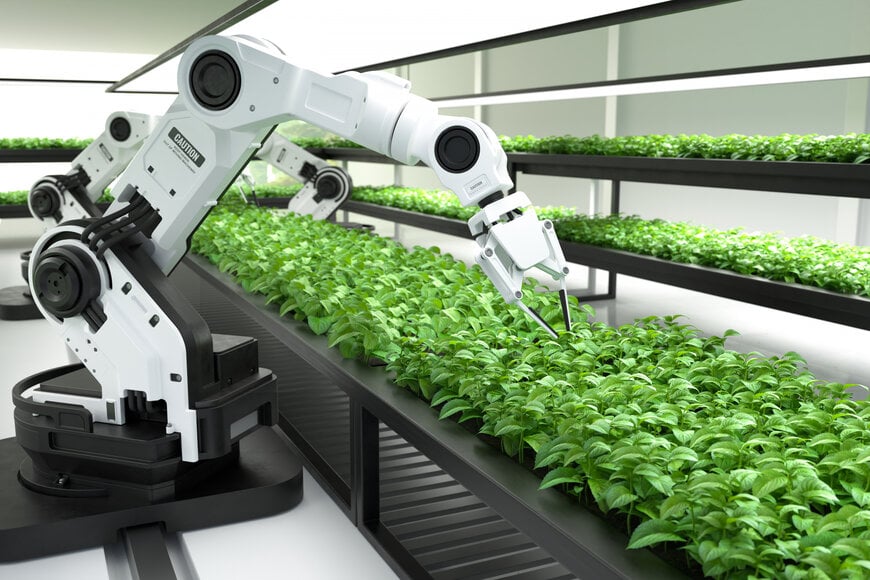
Food, along with air and water, is among the most basic of human needs, essential for survival. Agriculture is today the primary source of food for the global population, producing major staple crops like rice, wheat, vegetables, fruits, and pulses. It has evolved over thousands of years and undergone various revolutionary phases that transformed human survival from hunting-gathering to high-tech farming. Of these, the first began during the Neolithic period that marked the gradual transition to farming as the hunter-gatherers took to domestication of plants and animals. The second and more significant revolutionary phase coincided with the First Industrial Revolution (17th-19th Century) that saw a lot of advancements like crop rotation and early mechanisation of farm work. Next came the Green Revolution of the mid-20th Century, which witnessed the era of high yield, hybrid crop varieties boosted by synthetic fertilisers and pesticides. Presently, agriculture is experiencing the fourth of the major revolutionary phases – a data-driven era of precision agriculture that makes use of GPS, drones, robotics, IoT, and AI, in the process reshaping traditional cropping practices. This process of cropping automation spans the entire crop life cycle from soil preparation to harvesting, with the integration of automated machinery, smart sensors, precision software, and autonomous decision-making.
Today the world needs cropping automation due to various reasons ranging from labour shortages to climate variability. Rapid urbanisation has driven more and more people to the cities leaving a shortage of farm hands in rural areas, the traditional bastion of agriculture. Changing weather patterns – harsh summers, severe winters and unseasonal rains – too have affected farm output adversely. Against this backdrop, cropping automation is a boon aided by real-time crop monitoring, automated irrigation and fertigation systems, and autonomous harvesting technologies. The result is increased efficiency, reduced waste, and improved crop quality.
How automation helps soil and field preparation
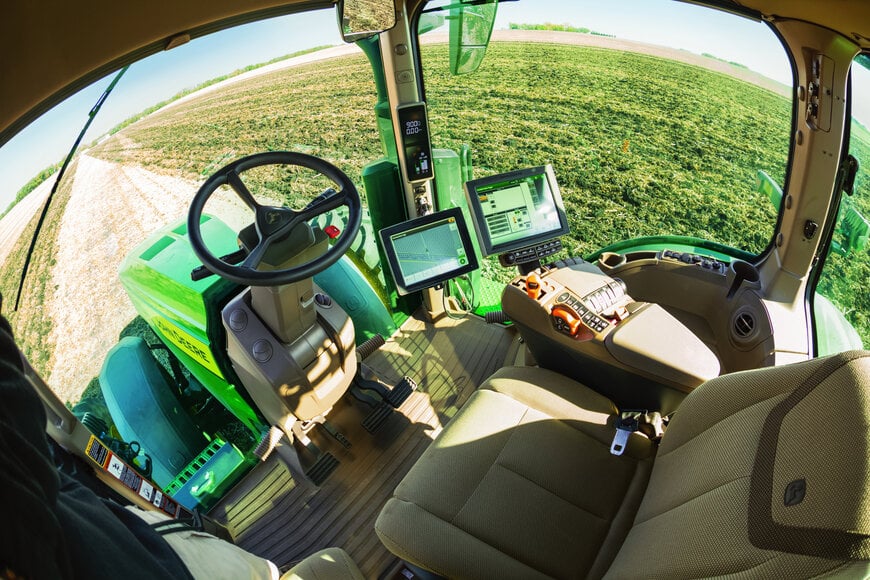
A typical crop cycle begins with soil preparation. What was once a manual exercise, later aided by mechanisation, is now automated with GPS-guided machinery, backed by AI-powered analysis, and guided by IoT sensors to create the ideal seedbed. This process not only improves soil structure but also reduces manual labour and saves energy. The sturdy conventional tractor has now metamorphosed into an autonomous version called agribot that also doubles as a soil analysing mini-lab and works round the clock without human intervention. Land levelling is also automated with lasers to improve water distribution, saving much time and effort, also optimising fertiliser use. The whole process is also aided by satellite mapping and predictive analytics to decide the right time for starting the process of tillinge, avoiding unfavorable weather conditions.
Automation aids irrigation and fertigation
Here again, automation optimises crop production by making use of sensors, controllers, and software to deliver precise amounts of water and nutrients directly to plant roots with the help of a sprinkler irrigation system. This enhances efficiency, reduces labour, water waste, and fertilizer usage, while ensuring consistent, scheduled, or demand-based delivery, resulting in higher yields and better soil health. The automatic irrigation is based on soil moisture data and weather forecasts, and nutrients are injected into irrigation systems in precise quantities.
This process of automation is helped by sensors that measure soil moisture, humidity, temperature, and nutrient levels (N, P, K). Then there are controllers that process sensor data to make decisions about watering and fertilizer mixing. Valves and actuators automatically open or close to control water and nutrient flow. The precise amounts of fertilizer are injected into the irrigation line. Further, IoT-based controllers allow remote monitoring and scheduling via mobile apps. Benefits include water savings of up to 30-50% in some cases and improved nutrient uptake efficiency, directly impacting yield and crop uniformity.
Automated equipment and robotics in crop operations
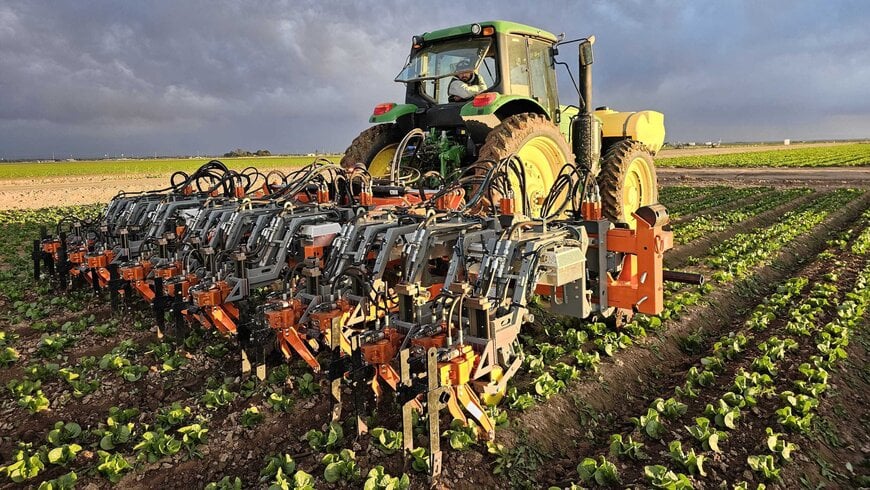
Automation has now transformed farming from traditional mechanisation to Agriculture 4.0 by leveraging technologies like AI, GPS, and IoT to address labour shortages and increase food production. Robots and cobots are playing a significant role in this transformation. The global agricultural robotics market is projected to reach approximately $31.33 billion by 2030.
Major developments include:
- Weeding robots: Use computer vision to distinguish crops from weeds and remove weeds mechanically or with micro-doses of herbicide.
- Spraying drones: Provide targeted pesticide application, reducing chemical use.
- Autonomous planters: Ensure consistent seed depth and spacing.
- Crop monitoring: Drones or UAVs equipped with multispectral cameras generate high-resolution health maps, detecting disease or water stress before they are visible to the naked eye.
- Harvesting: Specialised robots handle delicate tasks like picking strawberries without bruising.
- Field logistics robots: Move harvested produce or supply inputs across fields.
This segment is particularly important in regions facing acute agricultural labour shortages.
Crop monitoring and protection automation
Crops need constant monitoring and protection during their growth cycle. Doing this manually over vast stretches of the farm is highly labour intensive and time consuming. With the help of contemporary technologies – IoT sensors, drones, AI-based data analytics, and robotics – it is now possible to observe, analyse, and protect crops autonomously throughout their growth cycle. From manual field inspection and spraying, this task is now performed by real-time digital surveillance of crop health.
Technologies include:
Crop monitoring and protection automation
Crops need constant monitoring and protection during their growth cycle. Doing this manually over vast stretches of the farm is highly labour intensive and time consuming. With the help of contemporary technologies – IoT sensors, drones, AI-based data analytics, and robotics – it is now possible to observe, analyse, and protect crops autonomously throughout their growth cycle. From manual field inspection and spraying, this task is now performed by real-time digital surveillance of crop health.
Technologies include:
- Drone-based crop imaging: Detects stress, disease, and nutrient deficiency using multispectral cameras.
- Satellite crop monitoring: Provides macro-level field insights.
- AI pest detection systems: Identify early pest infestations.
- Digital farm dashboards: Integrate field data into decision-support tools.
These tools enable predictive crop protection, reducing pesticide use while improving yield stability.
Mechanised and automated harvesting
Manual harvesting has been replaced by mechanised harvesting for decades, especially with combine harvesters, but these are suitable only for grains. However, harvesting automation varies by crop complexity. Today there are many other types of specialised and automated machines with advanced technology to gather crops of different types including fruits and vegetables, utilising AI, robotic arms, and cameras for precision, delicate, or, selective harvesting.
Robotic harvesting remains challenging for delicate crops but is advancing rapidly with AI vision and soft robotics. It is still a work in progress by evolving rapidly.
Controlled Environment Agriculture (CEA) and vertical farming
Agriculture is now moving beyond mechanisation and automation, making way for a more advanced technology driven approach with Controlled Environment Agriculture (CEA). As opposed to open field agriculture exposed to the vagaries of nature, this is farming in greenhouses or indoor facilities with automatic climate control – temperature, humidity, CO₂, lighting and other parameters. Similar is the case with vertical farming, which is a variation within CEA, where crops are grown in vertical stacks with hydroponics and aeroponics – advanced, soil-free cultivation methods that maximise water efficiency and nutrient uptake.
CEA and vertical farming facilitate crop cultivation during all the seasons, maximising production in comparatively much smaller indoor spaces like huge warehouses or covered stadia. Major advantages include extremely high yield per square metre; minimal water use; and potential for urban food production. However, there are limitations such as high capital and energy cost and rather limited crop variety, i.e., mainly leafy greens and herbs at present.
Cropping Automation – Pros and Cons
While the benefits of cropping automation are many, these do not come without the flip side that obviously comes with many such developments. The pros and cons may be summarised briefly as follows:
Pros
Mechanised and automated harvesting
Manual harvesting has been replaced by mechanised harvesting for decades, especially with combine harvesters, but these are suitable only for grains. However, harvesting automation varies by crop complexity. Today there are many other types of specialised and automated machines with advanced technology to gather crops of different types including fruits and vegetables, utilising AI, robotic arms, and cameras for precision, delicate, or, selective harvesting.
Robotic harvesting remains challenging for delicate crops but is advancing rapidly with AI vision and soft robotics. It is still a work in progress by evolving rapidly.
Controlled Environment Agriculture (CEA) and vertical farming
Agriculture is now moving beyond mechanisation and automation, making way for a more advanced technology driven approach with Controlled Environment Agriculture (CEA). As opposed to open field agriculture exposed to the vagaries of nature, this is farming in greenhouses or indoor facilities with automatic climate control – temperature, humidity, CO₂, lighting and other parameters. Similar is the case with vertical farming, which is a variation within CEA, where crops are grown in vertical stacks with hydroponics and aeroponics – advanced, soil-free cultivation methods that maximise water efficiency and nutrient uptake.
CEA and vertical farming facilitate crop cultivation during all the seasons, maximising production in comparatively much smaller indoor spaces like huge warehouses or covered stadia. Major advantages include extremely high yield per square metre; minimal water use; and potential for urban food production. However, there are limitations such as high capital and energy cost and rather limited crop variety, i.e., mainly leafy greens and herbs at present.
Cropping Automation – Pros and Cons
While the benefits of cropping automation are many, these do not come without the flip side that obviously comes with many such developments. The pros and cons may be summarised briefly as follows:
Pros
- Higher productivity: Automated systems enable faster, more precise farm operations and can run for longer hours with minimal downtime.
- Resource optimisation: Precision irrigation, fertigation, and spraying reduce water, fertiliser, and chemical usage.
- Labour efficiency: Helps address labour shortages and reduces dependence on seasonal manual labour.
- Improved crop quality: Real-time monitoring enables early detection of disease, pest attacks, and nutrient deficiencies.
- Data-driven farming: Enables better planning using historical and real-time field data.
- Sustainability benefits: Lower input waste and optimised resource use reduce environmental footprint.
Cons
- High capital cost: Initial investment in machinery, sensors, and software can be prohibitive, especially for small farms.
- Technical skill requirement: Farmers need training to operate, maintain, and interpret automated systems.
- Connectivity dependence: Many systems rely on stable internet, satellite, or network infrastructure.
- Data security and ownership issues: Farm data is increasingly valuable and raises privacy and control concerns.
- Crop and terrain limitations: Not all crops or field conditions are easily automated.
- Energy demand: Advanced systems, especially indoor or vertical farms, can have high power consumption.
Top 10 global companies in cropping automation
1. Deere & Company (John Deere): World’s largest agricultural machinery manufacturer. Leader in autonomous tractors, precision planting, AI-driven crop analytics.
2. Trimble Inc: Global precision agriculture technology integrator. Strong in field mapping, automation guidance, water management.
3. AGCO Corporation: Multi-brand global ag OEM (Fendt, Massey Ferguson, etc). Strong push into autonomous and modular farm robotics.
4. CNH Industrial (Case IH/New Holland): Strong robotics and semi-autonomous machinery portfolio. Acquisitions (e.g., precision automation tech) boosting capabilities.
5. Kubota Corporation: Strong automation adoption in Asia-Pacific farming. Leader in compact autonomous machines.
6. CLAAS: Global harvesting technology leader. Strong integration of machinery + digital farm IT.
7. Topcon Corporation: Precision positioning + automation electronics. Strong OEM partnerships.
8. The Climate Corporation (Bayer Digital Farming): Data-driven crop decision automation. Software layer across cropping lifecycle.
9. GEA Group (Agri Automation / Dairy + Crop Adjacent): Industrial automation + ag systems. Expanding into smart farming and controlled-environment agriculture.
10. FarmWise (Ag Robotics – Cropping-Specific): Pure-play cropping robotics. Chemical-free autonomous weeding.
The road ahead
With the global population estimated to grow to 9.7 billion people by 2050, cropping automation offers a viable alternative to traditional farming practices to ensure food security. Changing weather patterns and extreme climate events are increasingly leading to farmer distress and loss of crops, in addition to the shortage of labour and rising costs of inputs. Automation amid such a scenario offers threefold advantages of increased production, better remuneration for farmers, and sustainable agriculture. Ongoing research and development is leading to modular and scalable models which will be easier to adopt for small and marginal farmers in a gradual manner rather than complete switchover to automation. The coming together of edge computing and AI along with robotics and improved weather predictability will facilitate creation of autonomous farms.
The emergence of dedicated digital platforms that combine mechanisation with automation shall lead to wider adoption. On the other hand automated greenhouses and vertical farming models with hydroponics will expand in urban areas for greens and other high value crops. Cropping automation, much like its industrial counterpart, is not going to replace farmers but just augment their efforts with better decision making. The result will be better food security, sustainability, and profitability in an uncertain climate and economic environment.
1. Deere & Company (John Deere): World’s largest agricultural machinery manufacturer. Leader in autonomous tractors, precision planting, AI-driven crop analytics.
2. Trimble Inc: Global precision agriculture technology integrator. Strong in field mapping, automation guidance, water management.
3. AGCO Corporation: Multi-brand global ag OEM (Fendt, Massey Ferguson, etc). Strong push into autonomous and modular farm robotics.
4. CNH Industrial (Case IH/New Holland): Strong robotics and semi-autonomous machinery portfolio. Acquisitions (e.g., precision automation tech) boosting capabilities.
5. Kubota Corporation: Strong automation adoption in Asia-Pacific farming. Leader in compact autonomous machines.
6. CLAAS: Global harvesting technology leader. Strong integration of machinery + digital farm IT.
7. Topcon Corporation: Precision positioning + automation electronics. Strong OEM partnerships.
8. The Climate Corporation (Bayer Digital Farming): Data-driven crop decision automation. Software layer across cropping lifecycle.
9. GEA Group (Agri Automation / Dairy + Crop Adjacent): Industrial automation + ag systems. Expanding into smart farming and controlled-environment agriculture.
10. FarmWise (Ag Robotics – Cropping-Specific): Pure-play cropping robotics. Chemical-free autonomous weeding.
The road ahead
With the global population estimated to grow to 9.7 billion people by 2050, cropping automation offers a viable alternative to traditional farming practices to ensure food security. Changing weather patterns and extreme climate events are increasingly leading to farmer distress and loss of crops, in addition to the shortage of labour and rising costs of inputs. Automation amid such a scenario offers threefold advantages of increased production, better remuneration for farmers, and sustainable agriculture. Ongoing research and development is leading to modular and scalable models which will be easier to adopt for small and marginal farmers in a gradual manner rather than complete switchover to automation. The coming together of edge computing and AI along with robotics and improved weather predictability will facilitate creation of autonomous farms.
The emergence of dedicated digital platforms that combine mechanisation with automation shall lead to wider adoption. On the other hand automated greenhouses and vertical farming models with hydroponics will expand in urban areas for greens and other high value crops. Cropping automation, much like its industrial counterpart, is not going to replace farmers but just augment their efforts with better decision making. The result will be better food security, sustainability, and profitability in an uncertain climate and economic environment.
Article contributed by Milton D’Silva, a freelance technical writer, and former editor of Industrial Products Finder, India.
